-
طريق شونهوا، مدينة جينان، شاندونغ

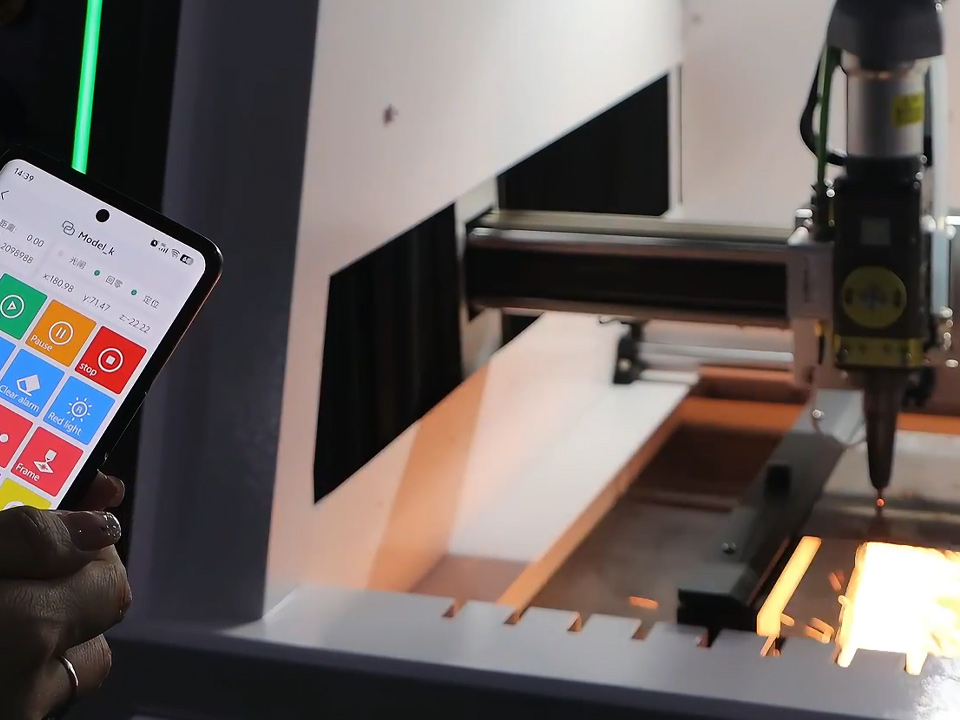
Laser Cutting Parameters for Stainless Steel Fabrication
Most stainless steel laser cutting problems do not come from “bad machines.” They come from sloppy parameter windows, dirty nozzles, weak gas discipline, and shops chasing speed before they stabilize edge quality. This guide breaks down the stainless steel laser cutting parameters that matter, where people waste money, and how to think like a fabricator instead of a brochure writer.

The ugly truth about stainless steel laser cutting
Most shops don’t lose money because the laser source is weak, or because the brochure overpromised, or because stainless steel is somehow “difficult” in a vague marketing sense; they lose money because the cut recipe is sloppy, the nozzle is half-dead, the gas line is treated like an afterthought, and everyone keeps pretending a faster program automatically means a better process.
That’s it.
And I frankly believe this is where a lot of fabrication teams fool themselves. They’ll brag about wattage, then whisper about edge cleanup, corner burn, bottom burr, weld prep, and that operator who somehow “always gets the better cut” on the night shift. You know what that usually means? Process discipline. Not magic.
But here’s the ugly truth: laser cutting stainless steel is not won by raw power alone. It’s won in the margins — focus shift, gas behavior, nozzle condition, stand-off, pierce logic, and whether the operator knows when the cut window is starting to drift before the scrap bin starts filling up.
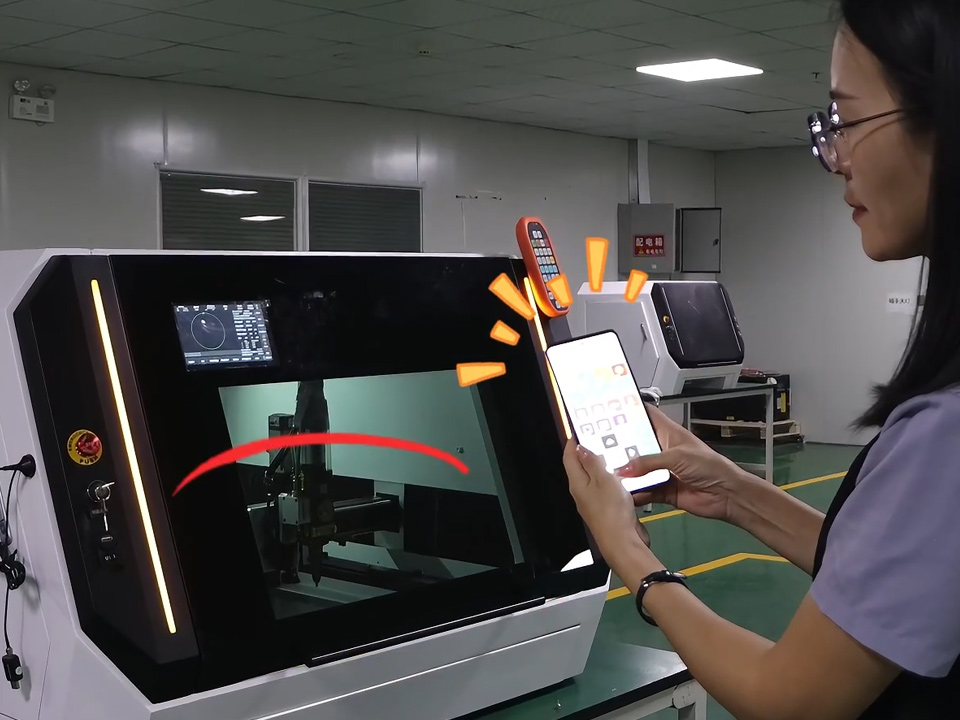
What the parameters really control on the shop floor
Power is not the hero
Everybody starts with power. I get it. It’s the flashy number.
But on stainless, power without the rest of the stack lined up is just expensive chaos. Too much heat in the wrong window, and the kerf opens up. Too little control, and the lower edge starts telling the truth long before the top surface does. The top can look clean enough for a sales photo. The underside? Different story.
I’ve seen this again and again. Shops chase “more source power” when the real leak is process stability — speed mismatch, assist gas waste, focus not centered where it should be, or a nozzle that should’ve been swapped two shifts ago.
And yes, recent test data points the same way. A 2024 study on AISI 304 reported that cutting speed and gas pressure significantly affected roughness and kerf behavior, while speed carried the strongest effect in the tested setup, accounting for 70.74% of the surface roughness influence. That’s not a small detail. It’s the whole argument.
Cutting speed is where profits hide
Speed gets talked about like a stopwatch variable. That’s too simplistic.
It changes dross ejection, drag line shape, thermal load, bottom-edge condition, kerf taper — the whole feel of the cut, really. Push it too hard and the melt stops evacuating cleanly. Stay too conservative and you bake the edge, widen the heat effect, and then someone downstairs gets stuck sanding or blending what should’ve come off the table clean.
Usually.
From my experience, operators often blame gas first because it’s easy to see and easy to talk about. But the speed window is often where the real fight is happening. That 2024 AISI 304 paper found roughness dropped as speed increased under the tested nitrogen setup, while increasing gas pressure actually increased roughness. That should bother a lot of people who solve every stainless issue by cranking pressure.
Focus position is the silent killer
This one gets ignored — constantly.
People treat laser focus position for stainless steel like it’s a settings-table footnote. It isn’t. It changes where the energy density sits through the thickness, which changes melt flow, which changes the way the gas plume can actually clear the cut. Miss that window, even by a bit, and you get the classic fake-good result: top edge looks decent, bottom edge looks like it came from a different machine.
And thicker material makes the lie worse.
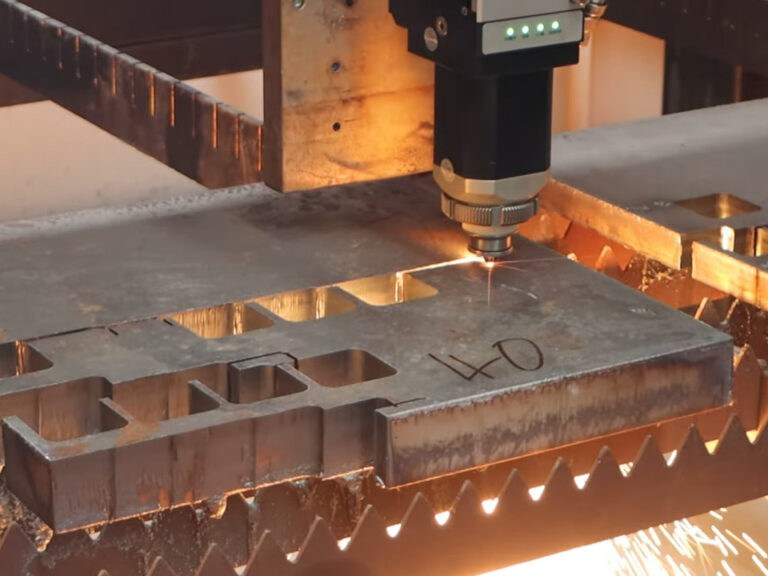
A 2024 stainless cutting study dealing with underwater cutting of 304 stainless is obviously a special case, but the takeaway still matters: focal position was not a decorative parameter. It was central to cut quality. In related results cited there for 50 mm thick stainless, researchers reported a focal position of −30 mm, laser power of 9 kWو cutting speed of 30 mm/min as part of an optimal condition set. Different environment, same lesson — focus matters more than most teams admit.
Nitrogen vs oxygen for stainless steel laser cutting
Nitrogen is usually the right answer when edge quality matters
Let’s not overcomplicate this.
If the part is visible, finish-sensitive, going to welding, or heading into any job where oxide on the edge becomes somebody else’s headache, nitrogen is usually the better path. That’s why nitrogen vs oxygen for stainless steel laser cutting is only a debate in shops that are still pretending gas cost is the same thing as process cost.
It isn’t.
Nitrogen gives you the cleaner, brighter, lower-oxidation edge people usually want on stainless. Not always cheaper. Often better. TRUMPF’s machine documentation says high-pressure cutting with nitrogen is used for stainless and aluminum alloys, and the manual gives example data of 20 bar cutting pressure and 90 m³/h gas consumption in that setup. Those numbers matter because they remind you this is a quality route with real gas demand attached to it.
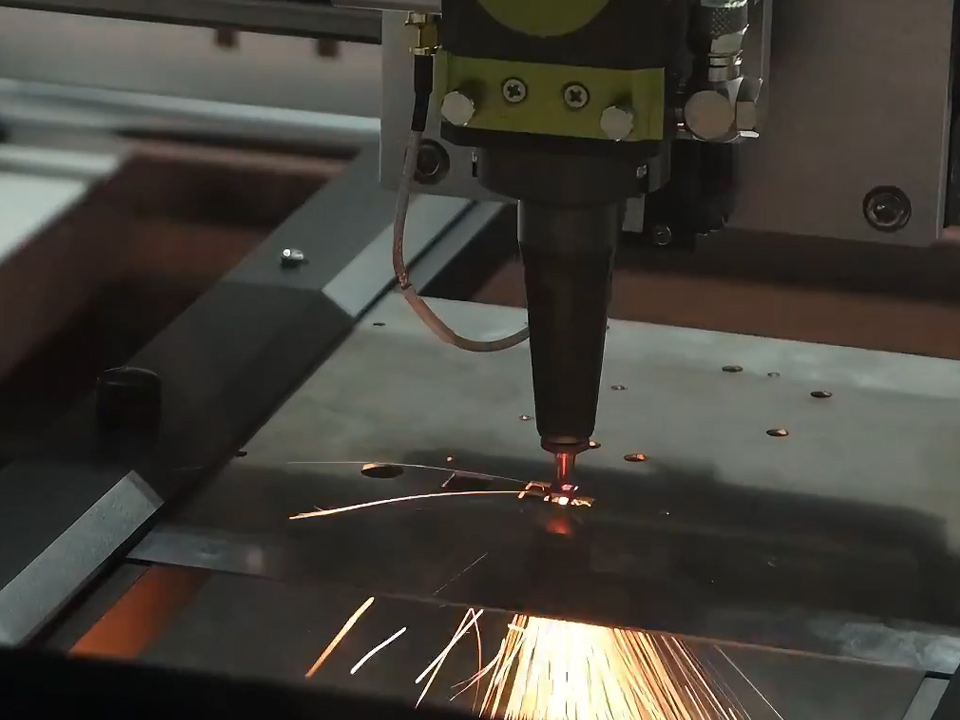
Oxygen is faster in some contexts, but it comes with baggage
Sure, oxygen has its place. I’m not pretending it doesn’t.
But on stainless, especially when appearance matters, oxygen often hands you a dirty bargain: darker edge, more oxidation, more cleanup, and more downstream annoyance. If the part is buried inside an assembly and nobody cares, maybe you accept that. If it’s a visible panel, a food-equipment component, a premium enclosure, or anything that needs a cleaner edge? Different conversation.
And this is the part that gets buried in meetings: the cheap cut is not cheap if it creates handwork later.
That’s the trap.
A quick comparison fabricators should actually use
| Parameter choice | What you usually gain | What you usually pay for |
|---|---|---|
| Nitrogen, high pressure | Bright edge, lower oxidation, cleaner cosmetic finish, better downstream fit for visible parts | Higher gas cost, heavier demand on gas supply, tighter nozzle discipline |
| Oxygen, lower pressure | Lower gas cost, usable throughput in some applications | Oxidized edge, more finishing, weaker cosmetic quality on stainless |
| Higher cutting speed | Better throughput, sometimes lower roughness if still inside the cut window | Incomplete ejection, bottom-edge defects, unstable corners if pushed too far |
| Lower focus position into thickness | Better coupling for thicker-section cutting in many setups | More sensitivity, easier to miss the sweet spot |
| Bigger nozzle / unstable nozzle condition | More forgiving flow in some cases | Burrs, asymmetry, wasted gas, inconsistent edge quality |
The parameter stack that actually works
Start with thickness, not ambition
This sounds obvious. It really isn’t.
A lot of shops start with the speed they’d مثل to run, then try to bully the material, gas, and focus into supporting that number. Backwards logic. Stainless punishes that kind of ego pretty quickly — sometimes on the table, sometimes later in bending, sometimes in weld fit-up when the parts start fighting each other.
I’d start here instead:
- grade: 304, 304L, 316, 430
- thickness: 1 mm, 3 mm, 6 mm, 12 mm, 20 mm
- required edge condition: bright, weld-ready, or “good enough for production”
- downstream process: bending, brushing, TIG, passivation, coating
Then build the cut recipe from there. Not the other way around.
And if your production line is broader than plain sheet cutting, that matters too. Shops that care about surface prep or oxide cleanup after fabrication sometimes end up looking at adjacent tools like a آلة التنظيف بالليزر النبضي because the real problem isn’t only cutting speed — it’s what the edge looks like when it gets to the next station.
Use speed to tune roughness, not just throughput
This is where people get stubborn.
The AISI 304 study linked above didn’t say “always run faster.” That would be lazy reading. What it did show is that, in the tested nitrogen setup, higher speed reduced roughness while higher pressure increased it. In plain English: some shops are leaning on gas when they should be tuning motion.
I’ve seen it. You probably have too.
There’s a certain operator habit — crank gas, hope for the best, call it “safe.” Usually it’s just expensive.
Watch nozzle condition like a hawk
Nozzle health is not housekeeping. It’s money.
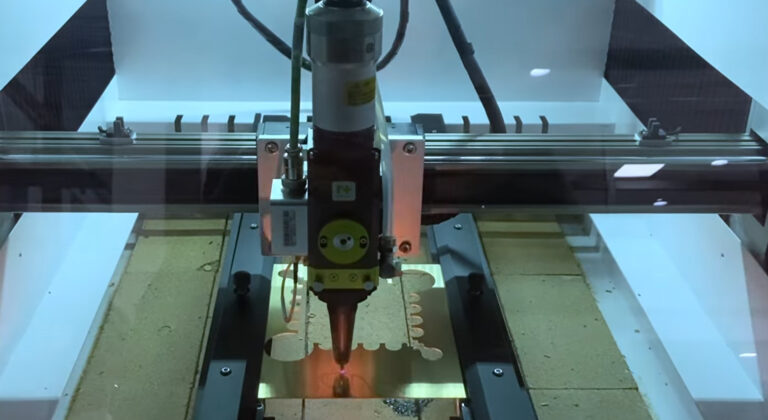
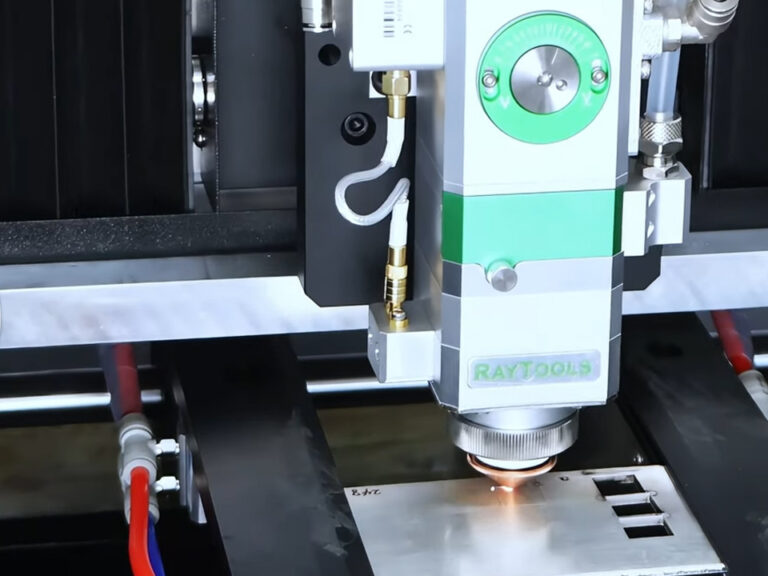
This is one of those boring truths nobody puts on the front page of a machine brochure. But nozzle damage, beam centering drift, and poor gas flow symmetry will quietly wreck your edge quality while the team argues about source power and software versions. TRUMPF’s documentation ties nozzle status directly to burr formation and cut reliability, which lines up with what any experienced fabrication lead already knows.
It’s not glamorous. It works.
Don’t ignore gas economics
Nitrogen quality cutting on stainless can chew through margin if the gas system is messy, the nozzle is off, or the job mix hasn’t been priced honestly. That’s the piece sales teams often leave out when they throw around clean-edge promises.
And if your shop also does fine-detail branding, serialized parts, or decorative work after fabrication, it makes sense to think beyond the cut itself. That’s where related systems — say, a fiber laser engraving and cutting machine for metal jewelry for finer metal detail work, or a ماكينة الوسم بالليزر CO2 for marking jobs — start to enter the same production conversation, even if they aren’t doing the stainless sheet cut itself.
Recent evidence that cuts through the marketing fog
Case study 1: Paris 2024 torch production proved precision still beats brute force
A lot of people hear “Olympic torch” and think branding story. I hear tolerance stack, appearance risk, and public-facing fabrication where every tiny flaw becomes visible.
Reuters reported in November 2023 that the Paris 2024 Olympic torch was made from 0.7 mm steel plates and then laser-cut, welded, and assembled over a nine-month process. Thin stock. High visibility. Zero room for sloppy edge behavior. That’s a good reminder that clean sheet work is still about control, not chest-beating.
Case study 2: the 2024 AISI 304 roughness data said the quiet part out loud
I like this study because it annoys the right people.
It doesn’t flatter the “just turn up the gas” crowd. It shows the process is more nuanced than that. Under the tested nitrogen conditions, roughness improved with higher cutting speed, gas pressure worsened roughness, and speed carried 70.74% of the effect on surface roughness. That’s not trivia. That’s shop-floor ammunition.
Case study 3: stainless cutting still has a fume problem people like to downplay
Here’s the part that gets brushed aside until EHS shows up.
OSHA states that welding, cutting, and brazing work can expose workers to metal fumes و UV radiation, and OSHA’s hexavalent chromium material explains that hot work on stainless steel can form Cr(VI) through high-temperature oxidation. That means stainless cutting is not just a quality problem or a throughput problem. It’s a control problem — ventilation, extraction, work practice, the whole thing.
Frankly, too many shops still treat fume control like a paperwork problem. It’s not.
Where most stainless steel fabrication setups go wrong
They copy parameters across grades
Bad habit.
304 is not 316. 304L is not automatically “close enough.” Ferritic stainless doesn’t behave like austenitic stainless just because the sheet looks similar on the rack. You can reuse a starting point, sure. But if you reuse confidence without testing, that’s when scrap starts teaching the lesson for you.
They optimize the wrong metric
Fast cycle time looks good in a meeting. Rework does not.
So guess which one gets talked about more.
A cut that saves a few seconds but adds deburring, touch-up, blending, or fit-up correction is not a better cut. It’s just a cost transfer. Somebody still pays for it. Usually later. Usually under more pressure.
They ignore what comes after cutting
That’s the rookie move.
If the part is getting marked, cleaned, assembled, coated, or sold as a premium finished component, the cutting parameters need to be judged by downstream behavior too. That’s why broader workflow equipment sometimes matters more than people think — whether that’s an all-in-one fiber laser marking machine for integrated part identification, or a 3D UV laser marking machine when the production cell needs finer marking capability around finished surfaces.
الأسئلة الشائعة
What are the best laser parameters for stainless steel?
The best laser parameters for stainless steel are the matched combination of laser power, cutting speed, assist-gas type and pressure, focal position, nozzle condition, and stand-off distance that produce a clean lower edge, low roughness, stable kerf width, and minimal oxidation for a specific grade and thickness. After that direct answer, here’s the practical version: there is no magic chart that covers every stainless job. A thin 304 cover plate, a 6 mm 316 bracket, and a heavy 304L fabrication part do not want the same recipe. Start with thickness and finish target, then validate on coupons.
How do you laser cut stainless steel without burrs?
Laser cutting stainless steel without burrs means keeping the process inside a stable ejection window where molten metal exits the kerf cleanly instead of freezing at the lower edge. Then comes the less glamorous part — clean nitrogen, solid nozzle condition, correct beam centering, stable focus, and speed that’s aggressive enough to avoid heat buildup but not so aggressive that the cut starts losing evacuation. Most burr problems are process drift problems.
Is nitrogen or oxygen better for stainless steel laser cutting?
Nitrogen is usually better for stainless steel laser cutting when edge color, corrosion behavior, and cosmetic finish matter, because it produces a cleaner, lower-oxidation result than oxygen. In production terms, oxygen may still work when cost pressure is higher and the edge will be processed later, but for visible stainless parts, cleaner weld prep, and premium finish expectations, nitrogen is usually the safer call.
Your next step if you actually want cleaner stainless parts
Run the coupons.
Take your real stainless grade, your real thickness, and your actual production priorities — appearance, weld prep, throughput, gas spend, downstream cleanup — and build a small matrix. Change one serious variable at a time. Speed first. Then focus. Then gas pressure. Inspect the bottom edge like it matters, because it does. Record burr level, kerf width, roughness, and whether the part behaves properly in the next operation.
That’s how you build laser cutting settings for stainless steel that survive real production instead of collapsing outside a demo part.
And if you’re evaluating equipment for a broader metal workflow, don’t get hypnotized by headline power. Look at how tightly the machine holds a cut window, how efficiently it uses nitrogen, how predictable the edge stays across thickness changes, and how well it feeds the next step in the line. That’s where the money is.


نقرة ساخنة
اتصل بنا
التطبيق
©Copyright [bogonglaser.com]. BOGONG Laser Machine Supplier All Rights Reserved.