-
طريق شونهوا، مدينة جينان، شاندونغ

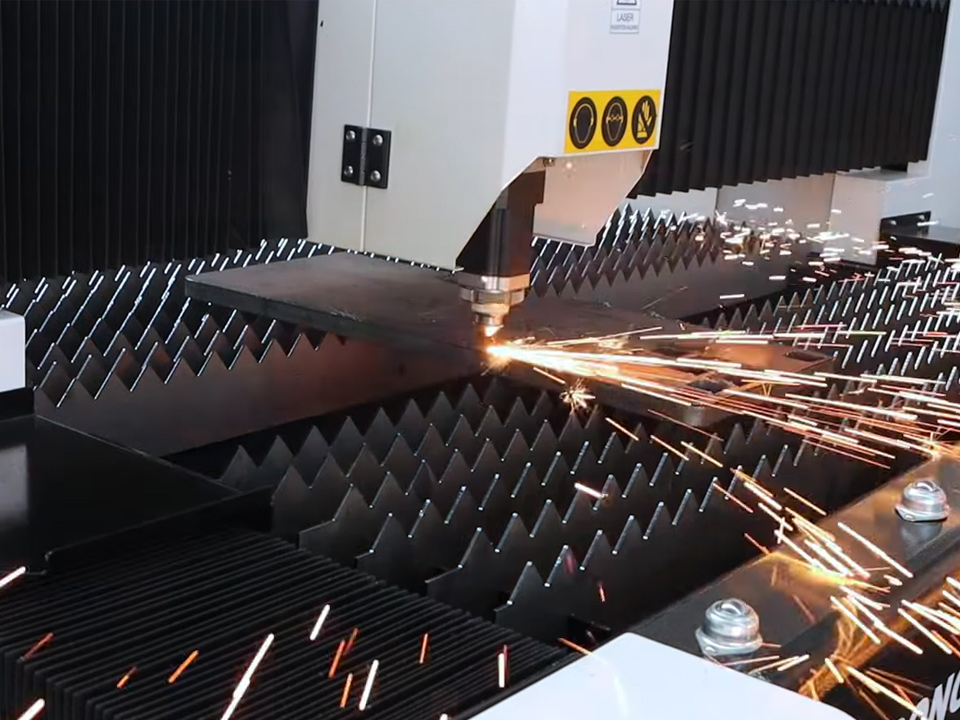
Best Fiber Laser Setup for Precision Server Chassis Cutting
Most buyers overspend on laser power and still get bad chassis parts because their setup is wrong. This guide breaks down the fiber laser cutting machine configuration that actually works for precision server chassis cutting.

Most shops buy wrong.
Not because they’re careless, and not because the sales pitch is always false, but because this corner of metal fabrication gets oversimplified in a really dangerous way: people think more wattage automatically means cleaner parts, faster output, better margins, fewer rejects, and an easier life on the floor. It doesn’t. Not even close.
That’s the sales version.
Here’s the ugly truth: server chassis work is fussy. Thin sheet. Dense vent fields. Tight I/O cuts. PEM zones. Fold lines that punish bad edge quality later. And once you’re dealing with 0.8 mm, 1.0 mm, 1.2 mm, 1.5 mm, maybe 2.0 mm SECC, SPCC, stainless, or aluminum, the machine spec sheet starts mattering less than the setup discipline behind it.
I’ve seen this.
A factory buys a big machine—because bigger sounds safer—then spends the next six months chasing burr, edge washout, slight corner overburn, nasty hole taper, and parts that look fine on the pallet but turn annoying the second they hit bending or hardware insertion. Nobody says it out loud, of course. They just blame the operator, then the material, then the gas, then the software. Same old story.
But power isn’t the hero here.
For precision server chassis cutting, I frankly believe the best setup is usually a properly tuned mid-power fiber laser cutting machine, most often in the 3 kW to 6 kW range, with a stable cutting head, dry gas delivery, good acceleration control, sensible nozzle management, and recipes built around actual enclosure parts instead of showroom samples. That’s where the money is. Quietly.
Why do so many people still shop by wattage first?
Because wattage is easy. Real process control isn’t.
And server chassis sheet metal cutting is really a process-control problem disguised as a machine purchase. You’re not just trying to cut outlines. You’re trying to maintain edge condition for bending, keep tiny vents clean, avoid heat ripple on thin panels, hold hole geometry near tabs and corners, protect downstream fit-up, and stop the line from bleeding time into deburring or rework. That’s a different job entirely.
So let’s stop pretending.
If most of your workload is thin-gauge enclosure metal, the right question is not, “What’s the highest power I can afford?” The better question is, “What machine will hold repeatable quality on 1.0 to 1.5 mm sheet all day, with vent arrays, mounting holes, and cosmetic edges, without eating my gas budget or turning programming into therapy?”
That question matters.
I’d start with a proven آلة القطع بالليزر الليفي built for stable flat-sheet production. If your factory really does have a meaningful mix of both enclosure panels and tubes, then yes, an all-in-one fiber laser metal cutting machine for tube and sheet can make business sense. But only if the mix is real. Too many buyers convince themselves they need “flexibility,” then spend money on a hybrid setup when a dedicated flat-sheet machine would’ve been faster, cheaper, and simpler to keep running.
That happens a lot.
Thin sheet punishes bad habits. Especially on server chassis jobs. A machine can look fast on a demo square—sure, everybody looks good cutting a rectangle—but then fall apart once the part file includes fan vents, PSU windows, dense perforation zones, motherboard backplate geometry, cable pass-throughs, grounding tabs, and all the other fiddly little features that make enclosure work such a pain when the process window is sloppy.
And the process window does get sloppy.
Nozzle wear. Assist gas inconsistency. Poor pierce logic. Bad height following. Heat accumulation through repeated small geometry. Overaggressive corner speed. Weak extraction on galvanized stock. Tiny things. Expensive things.
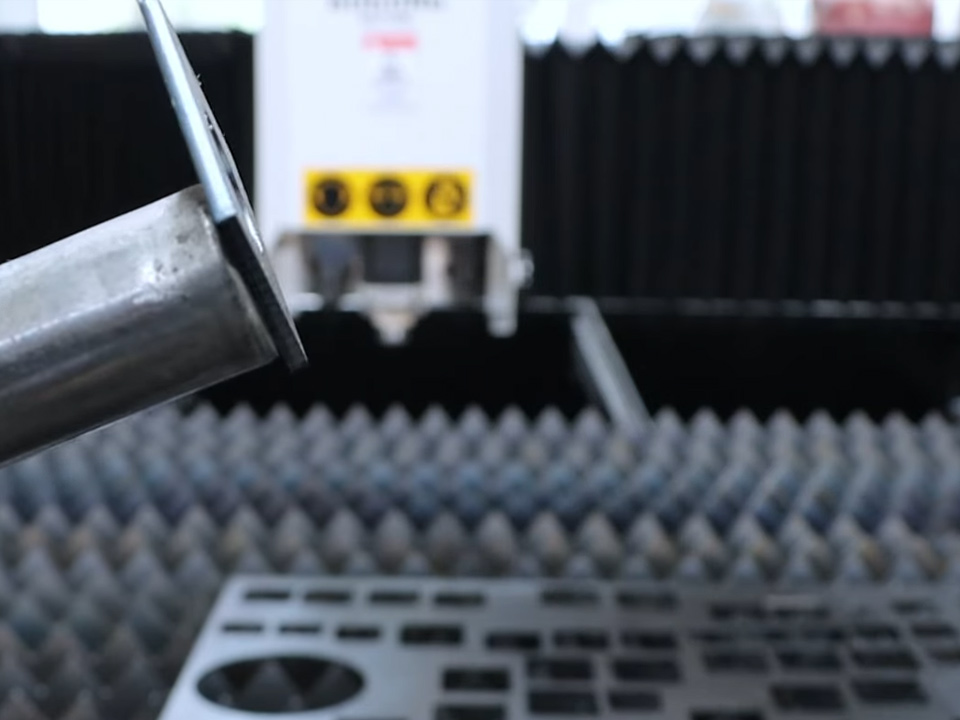
So what’s the actual best fiber laser setup for server chassis cutting?
Usually this: a 3015 platform, 3 kW to 6 kW power class, auto-focus cutting head, reliable capacitive height control, high-purity dry nitrogen for visible or oxidation-sensitive parts, stable compressed air only where edge condition allows it, and parameter libraries tuned to your real materials—1.0 mm SPCC, 1.2 mm SGCC, 1.5 mm stainless, maybe 2.0 mm aluminum—not generic “mild steel” presets some supplier tossed into the controller.
It sounds boring. Good.
Boring setups make money.
I don’t say that to be cute. I say it because server chassis manufacturing rewards consistency, not fireworks. You want the machine to do the same thing at 9:00 a.m. and 5:40 p.m., on Monday and Thursday, on vent-heavy parts and cleaner outer-panel blanks. Stable throughput beats peak speed. Every single time.
Here’s where a lot of teams mess up: they optimize for straight-line speed because it looks impressive on paper, but real chassis parts aren’t long, lazy cuts. They’re stop-start geometries with thermal load changing across the sheet, especially when you’ve got ventilation arrays or repeated slot patterns. That’s where motion control, acceleration tuning, and head stability start separating real machines from brochure machines.
And brochure machines are everywhere.
If your parts are small, or you’re doing prototyping, low-volume cabinet work, and compact panels, a 5050 small fiber laser cutting machine can absolutely have a place. I wouldn’t build a full-on server chassis production plan around that footprint unless your parts genuinely fit and your volume supports it—but for certain shops, it’s a practical option. Just don’t romanticize “small and flexible” if your actual output demands a bigger work envelope.
That shortcut gets expensive fast.
Let’s get practical for a second.
| Setup Element | Best Range for Server Chassis Work | What I Recommend | What Usually Goes Wrong |
|---|---|---|---|
| قوة الليزر | 3 kW–6 kW | 3 kW for lighter duty, 6 kW for mixed workloads | Buyers overspec power and lose cut stability on thin sheet |
| Typical Material Thickness | 0.8–2.0 mm | Optimize recipes around 1.0, 1.2, 1.5 mm first | Shops chase max thickness instead of daily production reality |
| Assist Gas | Nitrogen for clean edges, air for cost control | Use high-purity dry nitrogen for visible parts | Wet or unstable gas pressure causes burr and oxidation |
| Cutting Head | Auto-focus capacitive head | Stable height control with tested nozzle library | Cheap heads drift and ruin small holes |
| Bed Format | 1500 × 3000 mm or 1500 × 4000 mm | Choose based on panel nesting and floor space | Oversized beds waste footprint and handling time |
| Positioning Focus | Hole accuracy and edge squareness | Tune for vents, tabs, PEM zones, bend-critical features | Teams optimize only for straight-line speed |
| الأتمتة | Shuttle table minimum | Add loading if volume is consistent | Manual loading kills output before the laser does |
| Fume Control | High-efficiency extraction | Strong dust removal for galvanized sheet | Poor extraction contaminates optics and shop air |
That table looks simple. It isn’t.
Each row hides a dozen ugly shop-floor lessons. Take assist gas, for example. Everyone says “use nitrogen for better edges,” which is true—but incomplete. Nitrogen only helps if the supply is dry, pressure is stable, and your line doesn’t dip every time the rest of the plant wakes up. Otherwise you’re paying premium gas prices for mediocre results. I hate that kind of fake precision.
And air cutting? Yes, it can save money. No, it’s not magic.
For non-cosmetic parts, internal brackets, and some enclosure components where a little edge oxidation won’t wreck downstream work, filtered compressed air can make sense. But you have to test it honestly. Not on one lucky panel. On actual production geometry. Repeatedly. With your own material lot. People love theoretical savings. I don’t.
From my experience, the real make-or-break issue in precision server chassis cutting machine performance is parameter discipline. That means proper standoff. Correct nozzle size. Focus position that matches the material and geometry. Smarter corner slowdown. Pierce routines that don’t scar thin sheet. And maybe most overlooked of all—heat management across dense feature clusters. Vent fields look innocent. They’re not.
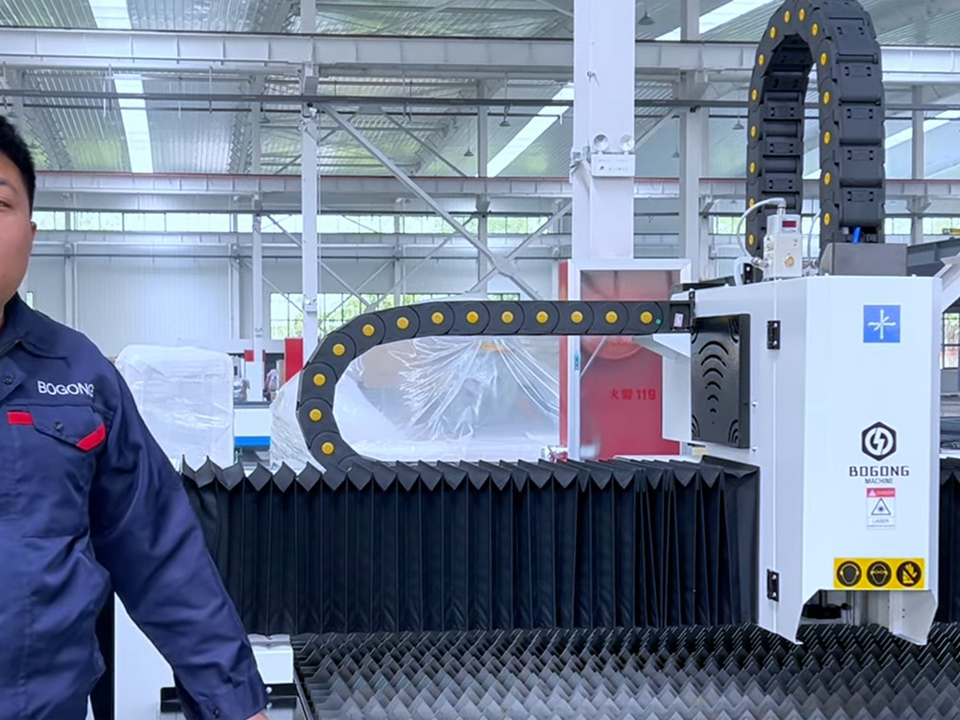
They’ll humble you.
A machine that breezes through simple perimeter cuts may still struggle once the file contains 300 tiny openings on 1.0 mm galvanized sheet. Suddenly the kerf starts wandering. Tiny parts tip. The sheet warms up. The edge dulls. The corners get soft. And now your “high-speed” cell is producing average parts faster—which is not the same as producing good parts profitably.
That distinction matters.
I’d also pay real attention to the supplier’s honesty during evaluation. If every answer somehow leads back to “higher power,” I get suspicious. If they don’t want to test your actual DXF files—especially vent-heavy chassis panels—that’s worse. And if their sample strategy is all thick mild steel coupons and vanity demos, I already know what they’re hiding.
Because the job is thin sheet.
Thin sheet enclosure work needs a machine with decent dynamic response, stable head control, good control software, and recipes built around repetition. Not drama. Not ego. Not that weird industry habit of pretending a server chassis line should be spec’d like it’s cutting ship plate.
That’s nonsense.
The same logic applies to supporting workflow. You can buy a solid machine and still kneecap the whole cell with bad extraction, weak dust management, poor optics housekeeping, and a chaotic floor around the cut zone. If the machine area isn’t controlled, contamination wins eventually. A laser protective fence may not be the glamorous part of the purchase, but safety and shop discipline aren’t optional extras. They’re part of the setup whether people like it or not.
And one more thing—marking.
Server chassis production often needs serial fields, traceability zones, QR positions, or part IDs on subcomponents. If that matters in your flow, it’s smart to think ahead about how the cut parts feed into a آلة الوسم بالليزر. Not because every shop needs it on day one, but because once volume climbs, “we’ll mark them later” turns into a mess faster than managers expect.
So what’s the best laser cutter for metal chassis fabrication?
I’ll say it bluntly: for most shops making server enclosures, it’s the machine that cuts 0.8 mm to 2.0 mm sheet cleanly, repeatedly, and economically—not the one with the biggest power badge. If your mix is mostly 1.0 mm, 1.2 mm, and 1.5 mm sheet with lots of small features, a well-sorted 3 kW or 6 kW setup is often the smartest choice. You need quality in the tiny stuff. That’s where the profit leaks hide.
Not in the brochure.
Here’s a simple buying filter I trust: If 70% or more of your jobs are thin-gauge enclosure panels, buy for dynamic stability. If gas cost is becoming a line-item headache, test real parts under both nitrogen and air. If downstream bending matters, inspect the edge after the brake—not before. If your operator team is still maturing, don’t buy a machine that demands heroic process babysitting. If the supplier won’t prove small-hole quality on your own material, walk away.
It’s really that simple. Usually.
And yes, there’s a trap here. Shops often believe they can fix a bad machine choice later with “better parameters.” Sometimes. Not always. A poor head, shaky motion system, weak extraction, or unstable gas infrastructure will drag the whole process down no matter how many parameter sheets you build.
Bad bones stay bad.
That’s why I keep coming back to balance. The best fiber laser setup for server chassis cutting isn’t flashy. It doesn’t need to be. It’s a balanced system: right power, right bed size, right gas, right motion behavior, right recipes, right handling. And once that system is dialed in, the output gets almost boring—clean holes, straight edges, bend-ready parts, fewer headaches.
That’s what good looks like.
الأسئلة الشائعة
What is the best fiber laser setup for precision server chassis cutting? The best fiber laser setup for precision server chassis cutting is usually a 3 kW to 6 kW flat-sheet system with stable auto-focus control, high-purity dry nitrogen, optimized thin-sheet cutting parameters, and a 3015 working area sized for enclosure panels. That combination gives the best balance of edge quality, hole accuracy, speed, and operating cost for 0.8 mm to 2.0 mm sheet metal chassis parts. If I had to boil it down even more, I’d say this: buy for repeatability, not bragging rights. The right head, gas line, nozzle library, and parameter discipline will do more for server chassis sheet metal cutting than chasing oversized power ever will.
How do I choose a fiber laser for server chassis manufacturing? Choosing a fiber laser for server chassis manufacturing means matching the machine to your daily material thickness, part geometry, vent density, edge-finish requirements, and production volume rather than buying based on maximum cutting thickness alone. Start with your real part mix. Not the future dream mix. If most of your work is thin-gauge cabinet panels with dense features, prioritize stability, hole quality, and thermal control. And yes—ask for test cuts on your own DXF files. That tells you what the sales deck won’t.
Is higher laser power always better for server chassis sheet metal cutting? Higher laser power is not always better for server chassis sheet metal cutting because thin-sheet enclosure production depends more on control, gas quality, focus accuracy, and heat management than on raw wattage. Honestly, overspec’d power often creates its own headaches on 0.8 mm to 2.0 mm material if the process window isn’t tight. I’d take a well-tuned 3 kW or 6 kW machine over a bigger, fussier setup any day for this kind of work.
What assist gas is best for fiber laser cutting thin server chassis metal? The best assist gas for fiber laser cutting thin server chassis metal is usually high-purity dry nitrogen when you need clean, bright, oxide-free edges, especially for visible parts or components that go into coating or precision assembly. That said, don’t treat nitrogen like a religion. Filtered compressed air can work on some non-cosmetic parts—but only after real production testing. Gas quality, dryness, and pressure stability matter more than people admit in public.
What material thickness is typical for server chassis laser cutting? Typical material thickness for server chassis laser cutting usually falls between 0.8 mm and 2.0 mm, with common production grades including cold-rolled steel, galvanized steel, stainless steel, and aluminum depending on the enclosure design and performance target. That thickness range is exactly why mid-power machines make so much sense here. You’re usually not cutting heavy plate. You’re cutting fussy, bend-sensitive, feature-dense parts where consistency beats brute force.
If you’re comparing options for your enclosure line and want a machine matched to your actual sheet thickness, part size, and production goals, visit our laser cutting machine application page or explore our full laser products range. For a direct recommendation based on your materials and chassis drawings, contact us through our contact page.


نقرة ساخنة
اتصل بنا
التطبيق
©Copyright [bogonglaser.com]. BOGONG Laser Machine Supplier All Rights Reserved.