-
Дорога Шуньхуа, місто Цзінань, провінція Шаньдун

How Much Does a Production Fiber Laser Cutting Machine Cost?
Most buyers ask the wrong question. The real issue is not the sticker price of a production fiber laser cutting machine, but the full cost stack: power source, bed size, automation, software, gas use, labor, downtime, and missed throughput.

I’ve sat in enough machine quote calls to know how this usually goes: someone asks for the price of a production fiber laser, someone else throws out a wattage number, and then the whole conversation starts drifting toward brochure math instead of factory math, which is exactly where expensive mistakes begin.
Because the sticker number? That’s the easy part. The hard part is figuring out whether the machine will still look smart after the install bill lands, after the gas bill starts chewing at margin, after the operator burns half a shift dialing in pierce settings, and after the “good deal” turns into a very moody cutting line that needs hand-holding every other week.
Here’s the ugly truth: production fiber laser cutting machine cost is not one number. It’s a moving target. For most buyers, the market breaks into three practical bands: $25,000 to $60,000 for smaller or entry-level industrial units, $60,000 to $180,000 for mainstream sheet-metal production machines, and $180,000 to $600,000+ for large-format, high-power, automation-heavy systems built for real throughput.
And yes, I know some sellers will dangle lower numbers. They always do. But if the machine quote looks strangely cheap, I immediately start wondering what got shaved off—source quality, control system, servo stack, chiller spec, software license, service promise, bed rigidity, commissioning support, spare parts response, or all of the above in one neat little trap.
I frankly believe too many buyers get hypnotized by wattage. They hear “6kW” or “12kW” and think they’ve learned something important, when in reality two machines with the same rated power can behave so differently on the floor that they may as well belong to different product classes, especially once you factor in cut-head stability, tuning tolerance, motion smoothness, and whether the machine can run a clean nest without throwing a tantrum halfway through the sheet.
That part matters more than people want to admit.
And the market outside the shop isn’t helping anyone keep the math simple either. Reuters reported that the World Steel Association expected global steel demand to rise 1.7% in 2024, after two rough years, which matters because a lot of fabricators only loosen capex when they think order flow is starting to firm up again. But on the other side of the ledger, China’s 2024 crude steel output fell 1.7% year over year to 1.005 billion metric tons, which is a pretty blunt reminder that demand softness and capacity pressure can make even a “cheap” machine feel overpriced if your cut list isn’t really there.
So when someone asks me, “How much does a fiber laser cutting machine cost?” I don’t really hear a pricing question. I hear five hidden questions underneath it: What materials are you cutting? What thickness mix pays your bills? Are you running oxygen, nitrogen, or shop air? How many sheets per shift? And—this is the one people skip—how disciplined is your floor?
Because a sloppy shop can waste a premium machine.
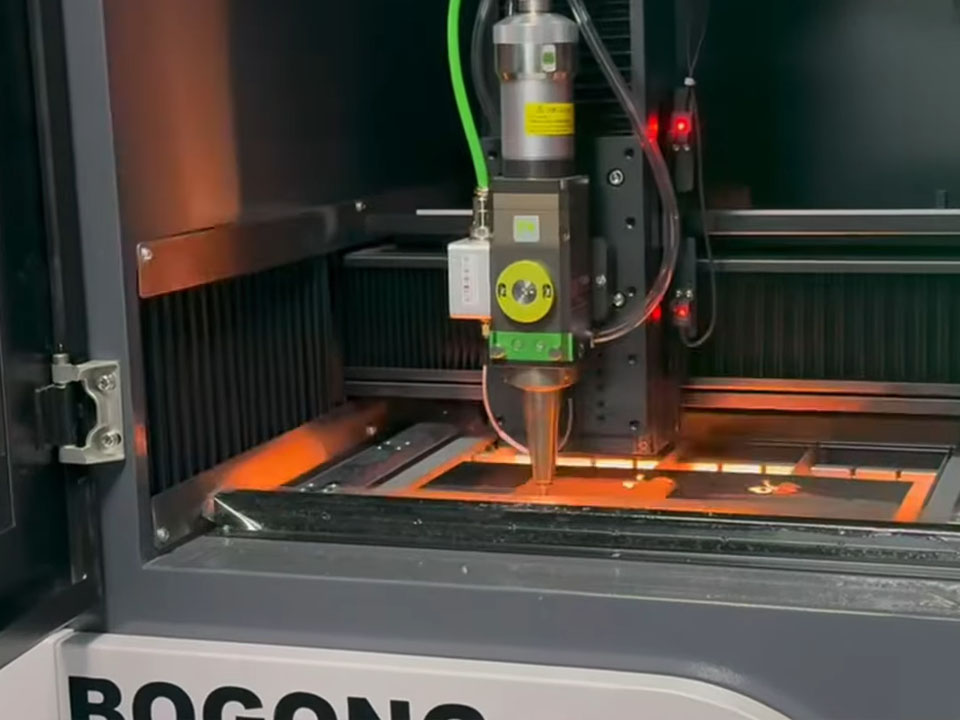
If you’re shopping small-format equipment for fine parts, samples, or compact metal work, a compact fiber laser cutting machine may absolutely make sense. But if you’re talking about steady sheet throughput, repeat jobs, day-in-day-out metal cutting, shorter turnaround, less babysitting, and less fiddling at the controller, your comparison set should shift toward a real fiber laser cutting machine for industrial sheet metal or, if your thickness and output justify it, a high-power 6000W to 40kW fiber laser metal cutting machine.
I’ve seen buyers make the classic mistake. They overbuy beam power and underbuy process discipline. They chase a bigger source because it sounds like the aggressive move, then spend the next year discovering that their real bottlenecks were material loading, nest quality, gas cost, operator skill, and job scheduling—not raw cutting speed. So now they own a monster and still miss easy money.
A 12kW system in a disorganized shop can be less profitable than a 3kW or 6kW machine in a shop that knows its mix, knows its jobs, and doesn’t waste half the day doing weird workarounds because someone never built a sane cutting workflow in the first place.
That’s why the fiber laser cutting machine price on the quote sheet is only the front door. The building behind it is bigger.
Here’s a clean way to look at the market.
| Machine Tier | Typical Power | Typical Price Range | Best Fit | What Usually Moves the Price |
|---|---|---|---|---|
| Compact / Entry Industrial | 1kW–3kW | $25,000–$60,000 | Thin metal, prototypes, low-volume shops | Source brand, table size, control system |
| Mid-Range Production | 3kW–12kW | $60,000–$180,000 | Daily sheet-metal production | Bed size, cutting head, auto focus, software, chiller |
| High-Power Production | 12kW–30kW | $180,000–$350,000 | Thick plate, faster throughput, multi-shift work | Source power, frame rigidity, gas system, extraction |
| Automated / Premium Line | 20kW–40kW+ | $350,000–$600,000+ | High-volume factories, automation cells | Loading/unloading, storage tower, bevel cutting, tube combo |
Now let’s talk about the bill nobody wants to model properly.
Electricity matters, sure, but I’d argue buyers often obsess over the wrong utility line. The IEA noted that EU industrial electricity demand fell an estimated 6% in 2023, after a similar drop in 2022, with only a gradual recovery projected across 2024–2026 as prices eased. That’s not abstract macro noise. It matters because a shop carrying high industrial power costs will feel ownership differently than a shop with steadier energy economics and better machine utilization.
But power alone? Not usually the killer.
Gas is where the spreadsheet gets ugly. Nitrogen especially. Stainless and aluminum jobs can quietly turn a “great” quote into a margin leak if no one did the assist-gas math with real production assumptions instead of sales-demo assumptions. Buyers love asking about industrial fiber laser cutter price while barely touching gas consumption, pierce strategy, nozzle wear, or compressor stability. That’s not procurement. That’s wishful thinking with paperwork.
And then there’s the stuff that never looks dramatic in a sales deck—chiller load, extraction, dust handling, consumables, software seats, operator learning curve, and whether your support team answers like a real service department or like a ghost with an email signature.
That last one stings.
I’ve watched shops lose days—not hours, days—because the machine supplier was “checking with engineering” while the buyer’s production queue stacked up and customers kept asking for ship dates. Cheap machine. Expensive silence.
So what actually drives metal fiber laser cutting machine cost upward?
First, source power and source brand. Obvious, but still the biggest lever. Second, bed size. A 3015 setup doesn’t price like a larger-format production bed, and freight rarely gets kinder as the machine grows. Third, automation. Exchange tables, loaders, unloaders, towers, all of that adds real money fast—but sometimes it’s worth every cent because labor drag is worse. Fourth, the head-servo-control package. This is where a lot of “same wattage” comparisons fall apart. Fifth, application complexity. If you need bevel work, sheet-plus-tube flexibility, or cleaner integration into an existing fab cell, the quote climbs because the machine is doing more than basic flat-sheet cutting.
Which brings me to combo systems.
If your floor is juggling both sheet and tube work, a sheet-and-tube all-in-one fiber laser cutting machine should not be judged against a bare sheet cutter in a lazy apples-to-apples price comparison. It should be judged against the labor consolidation, material handling reduction, floor-space pressure, and scheduling simplification it may create. That’s a different economic argument.
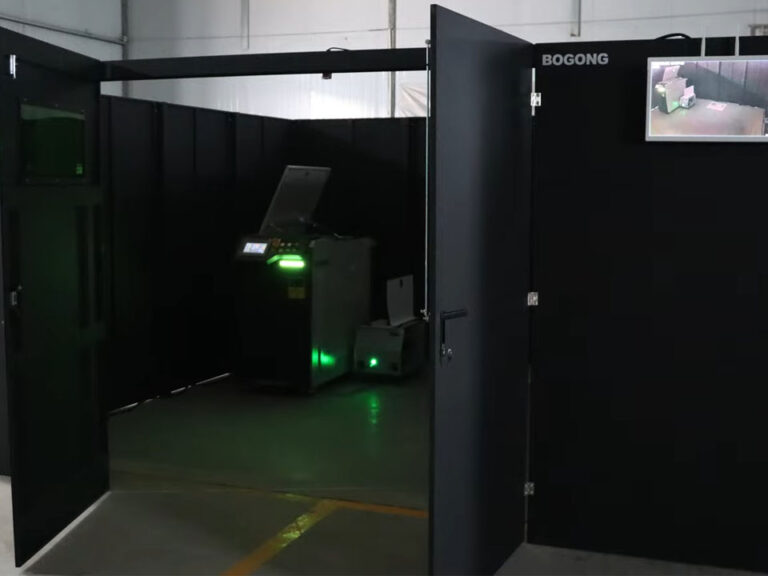
And in some factories, safety and layout choices push the number too. A laser protective fence system isn’t always some decorative upsell. In a tighter production environment—with people moving, forklifts weaving, adjacent stations working—it can become part of the real installation cost, not a “nice to have.”
Here’s another opinion I hold pretty strongly: the lowest CNC fiber laser cutter cost is often attached to the highest management pain. Weak docs. Patchy commissioning. Spare parts that wander around the planet. Calibration drift that somehow appears right before a rush job. Operators inventing tribal-knowledge settings because the official parameters don’t really hold up on live jobs.

A bargain is a machine that cuts, stays up, gets supported, and doesn’t force your team to become unpaid beta testers.
So how should a serious buyer think about it? Not like a tourist. Start with your real workload. What thicknesses make up 80% of your revenue? What metal mix shows up every week, not once a quarter? Are you feeding the machine one shift, two shifts, three? Can your floor actually keep a faster system fed? Is your team good enough with nesting and pierce logic to use the extra power well?
Because here’s the trap: a faster machine in a bad workflow just gets to the next bottleneck sooner.
That’s why software matters more than outsiders think. Nesting efficiency, remnant usage, path optimization, pierce count reduction, lead-in strategy—this is not flashy stuff, but it changes the economics in a very direct way. The machine may look identical from ten feet away, yet the better software stack can quietly save material and time every day without the buyer ever bragging about it on LinkedIn.
And not every shop should think about cutting in isolation, either. Some should think in cells. If your workflow naturally moves from cut parts into joining or cleanup, it can make sense to plan around related equipment such as a ручний лазерний зварювач or a імпульсна лазерна очисна машина. Not because every factory needs that setup. They don’t. But because the shops that scale well often stop buying isolated machines and start building connected process lanes earlier than everyone else.
That’s how they get sharper.
Also—and I’ll say this bluntly—I don’t trust generic ROI promises. I really don’t. A machine does not “pay for itself” because someone ran a heroic spreadsheet with perfect utilization, neat labor savings, and zero downtime. It pays for itself when it actually cuts profitable work, replaces outsourced volume, reduces scrap, shortens lead times enough to win more orders, and stays running often enough to justify the capex.
Поширені запитання
What affects fiber laser cutting machine price the most?
The biggest cost drivers behind fiber laser cutting machine price are laser power, bed size, automation level, source brand, control software, and installation requirements, not just the frame or the wattage printed in the quote. Those factors change not only the machine’s output, but also its stability, operating cost, and service expectations.
From my experience, buyers should rank the key variables like this: power and bed size first, automation second, then the head-source-control package, followed by gas setup, extraction, and commissioning. A quote that looks simple on paper can hide very different real-world performance depending on those pieces.
Is a higher-power fiber laser always worth the extra money?
A higher-power fiber laser is only worth the extra money when your material mix, order flow, shift pattern, and floor discipline can actually use the extra throughput in a consistent way. More kilowatts do not automatically create better profits; sometimes they just create a larger invoice and a more demanding process.
I’ve seen disciplined shops make very good money with 3kW or 6kW systems because the workflow was tight and the job mix fit the machine. I’ve also seen overpowered setups underperform because the real bottlenecks were loading, nesting, gas cost, and operator habits—not beam power.
What is the full cost beyond buying the machine?
The full cost of owning a fiber laser includes freight, installation, power infrastructure, gas supply, chiller load, extraction, software, training, consumables, maintenance, and downtime exposure, which means the purchase price alone almost never reflects the true investment. The machine body is just one piece of the total cost stack.
That’s where first-time buyers usually get surprised. Nitrogen consumption, nozzle replacement, lens contamination, slow service response, operator errors, and software limits all show up after the machine arrives. Those costs don’t always look dramatic at first, but over time they often decide whether the purchase feels smart or painful.
How do I choose the best production fiber laser cutting machine?
The best production fiber laser cutting machine is the one whose power, size, stability, service support, and automation level match your actual order profile rather than an inflated future plan. A machine that fits your real work well will usually outperform a bigger, flashier machine that your shop cannot fully use.
Start with the boring facts: your main metals, common thicknesses, sheets per shift, available labor, gas strategy, and support expectations. Then compare machines by uptime, nesting efficiency, service responsiveness, cut quality, and upgrade path. That’s how experienced buyers separate useful equipment from expensive noise.
If you want to compare options in a more grounded way, start with the fiber laser cutting machine category and judge each model against your actual production mix.


Гаряча клавіша
Зв'яжіться з нами
Заявка
©Copyright [bogonglaser.com]. BOGONG Laser Machine Supplier All Rights Reserved.