-
Дорога Шуньхуа, місто Цзінань, провінція Шаньдун

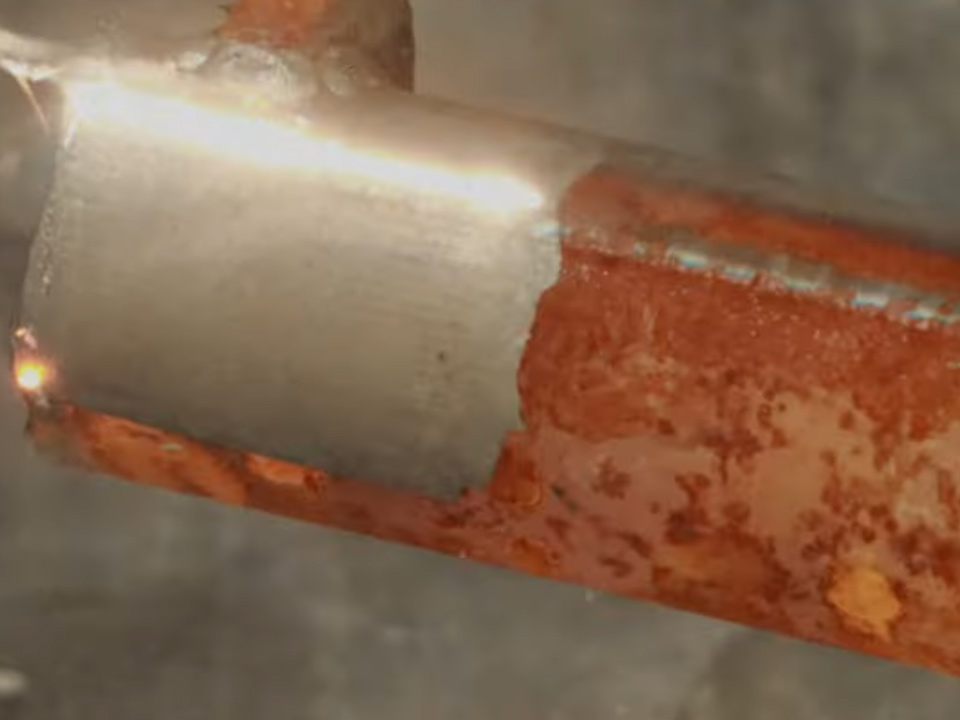
CW vs Pulsed Laser Cleaning Machines for Industrial Rust Removal
CW vs pulsed laser cleaning machines for industrial rust removal: power, precision, costs, safety, and where each system actually wins.

Three demos. Same mistake.
I’ve watched buyers stand in front of a rusty steel sample, nod at the sparks, ask one question about wattage, and then act like the purchase decision is basically done, even though nobody in the room has talked about substrate sensitivity, heat tint, edge rollover, line takt, or what happens when an operator parks the head a little too long near a seam. That’s not analysis. That’s showroom theater. Expensive theater.
And honestly?
That’s why so many first-time buyers get this wrong. They think they’re buying a faster rust-removal step. They’re actually buying a process window. Narrow or forgiving. Hot or controlled. Brutal or precise. That’s the real split hiding underneath the brochure language.
I frankly believe the market has over-sold CW to people who don’t actually need continuous thermal aggression. Sounds harsh, I know. But I’ve seen the pattern too many times: someone hears “higher power,” imagines “higher productivity,” ignores the metallurgy, and then acts surprised when the cleaned part comes out warm, discolored, slightly off-texture, or just inconsistent from operator to operator. It works. Usually.
But “usually” is not a serious standard in manufacturing.
The big difference is simple, even if vendors try to drown it in buzzwords: a pulsed laser cleaning machine dumps energy in short bursts, which gives you high peak power without cooking the substrate the same way a continuous beam can, while a CW machine keeps feeding energy into the surface and, yes, that can chew through contamination fast—but it can also push more heat where you don’t want it. That tradeoff matters every single shift.
So what are you actually buying?
If you’re cleaning thin steel, stainless, molds, weld-prep zones, tooling, battery parts, painted-over corrosion spots, or anything where the surface finish still matters after the rust is gone, pulsed usually makes more sense. If you’re hammering away at ugly, thick, tolerant steel where cosmetics are secondary and the job is basically “strip it fast and keep moving,” CW has a lane. A real one. Just not the universal one some sellers pretend it is.
That’s the ugly truth.
Rust removal isn’t one job. It’s ten jobs wearing the same name tag. Flash rust isn’t compact oxide. Pitted plate isn’t a clean coupon. A corroded flange with edges, corners, and residue behaves nothing like a flat sample in a trade-show booth with perfect standoff and zero production pressure. Yet buyers still ask, “Which one is better?” Better for what, exactly?
I’d frame it like this: CW vs pulsed laser cleaning is not a beauty contest. It’s a damage-control question. How much heat can the part tolerate? How much rework can your team absorb? How skilled are the operators? What’s the cost if somebody over-cleans one batch on Friday afternoon?
That last question matters more than most people admit.
And let’s talk shop-floor reality for a second. The process isn’t just about the beam hitting rust. It’s also fumes, extraction, safety barriers, workholding, scan consistency, and whether your operator is basically “painting the part” by hand with decent discipline—or just waving the head and hoping the oxide disappears. The machine spec sheet won’t save a sloppy process.
Which is one reason laser cleaning keeps pulling attention away from older cleanup methods. OSHA has long warned about abrasive blasting hazards in shipyard and industrial environments, and NIOSH lists the recommended exposure limit for respirable crystalline silica at 0.05 mg/m³ TWA, while OSHA’s permissible exposure limit is 50 µg/m³. If your rust-removal process fills the air with nasties, that’s not just housekeeping. That’s exposure risk with paperwork attached.
That part gets ignored.
People love to compare cleaning speed, but they don’t want to count media cleanup, disposal burden, masking time, secondary contamination, or how much dusty mess follows the part downstream. That’s lazy math. Laser cleaning changes the math. Higher upfront spend, often cleaner workflow afterward. Not always. But often enough that smart factories stopped laughing at it a while ago.
And this isn’t some fringe concept anymore. A U.S. defense acquisition paper discussing laser-based corrosion and coating removal noted that a GLC laser system received FAA Alternate Method of Compliance approval for removing paint, sealant, corrosion, and rust on metal aircraft structures. That’s not brochure fluff. That’s institutional validation that the tech has moved well beyond the “interesting demo” phase.
So no, the question isn’t whether laser cleaning works.
The question is which beam behavior fits your mess.
If I were advising a factory with mixed rust-removal jobs—some value-added parts, some moderate corrosion, some finish-sensitive work, some prep before welding or recoating—I’d start with a імпульсна лазерна очисна машина. Not because it sounds fancy. Because it gives you more room to be wrong without wrecking the part. That wider process window is worth real money.
Actually, that’s one of the least discussed buying factors in this whole market: forgiveness. A forgiving machine doesn’t just reduce scrap. It reduces training pain, speeds up adoption, and keeps operators from fighting the equipment. A machine people trust gets used. A machine people fear gets parked in the corner after the novelty wears off.
Seen that too.
Now, if your process is rougher—bigger steel structures, nastier oxide, less concern about micro finish, more emphasis on area coverage and brute-force stripping—then a CW laser cleaning machine deserves a serious look. Continuous energy can move material fast. It’s not nonsense. It’s just less forgiving when the job is more delicate.
That’s why I don’t like the usual sales framing. It turns the decision into “fast vs precise,” which sounds neat but misses the ugly middle where actual factories live. What you’re really choosing between is thermal aggression and process control. And that choice shows up later—in rework, consistency, and whether your cleaned surface is ready for the next operation or now needs babysitting.
For a lot of buyers, the smartest entry point is neither the smallest unit nor the loudest wattage number. It’s the middle. Something like a 200W pulse laser cleaning machine or a broader 200W–300W pulse laser cleaning system often hits the sweet spot for industrial rust removal without pushing shops into unnecessary thermal risk or budget bloat. That middle band covers more real-world jobs than people think.
And yes, parameters matter. A lot.
Pulse width, repetition rate, scan speed, spot behavior, overlap, standoff, contamination thickness—this is where the grown-up conversation starts. Two operators can use the same machine on the same steel and get very different outcomes if one of them understands the recipe and the other is just eyeballing it. That’s not a flaw in laser cleaning. That’s manufacturing. But it does mean you should stop treating wattage as the whole story.
Here’s a cleaner comparison.
| Factor | Pulsed Laser Cleaning Machine | Лазерна очисна машина CW |
|---|---|---|
| Energy delivery | Short pulses, high peak power | Continuous beam output |
| Heat input to substrate | Lower cumulative thermal load | Higher thermal load |
| Best use case | Precision rust removal, sensitive parts, finish-critical work | Heavy contamination, tolerant substrates, brute-force cleaning |
| Surface control | Better selectivity and operator forgiveness | More aggressive, less forgiving on delicate surfaces |
| Risk of discoloration or micro-surface change | Lower when properly tuned | Higher if dwell time is not tightly controlled |
| Typical buyer | Fabrication, aerospace, mold/tooling, maintenance teams needing control | Heavy industry, structural cleaning, buyers prioritizing removal rate |
| Learning curve | More parameter-dependent | Simpler concept, but easier to overheat surfaces |
| Cost logic | Higher process quality, lower rework risk | Higher throughput potential, but quality tradeoffs can rise |
I’d add one more point that buyers skip too often: the machine is not the whole cell. It never is. If you’re serious about deploying laser rust removal in production, you also need to think about guarding, extraction, reflection control, part presentation, and workflow discipline. That’s why supporting gear matters too, including something as unglamorous—but necessary—as a laser protective fence. People love spending on the source and cheaping out on the environment around it. Bad habit.
And market direction? It’s not subtle. Reuters’ company profile for Laser Photonics points directly at industrial use cases like corrosion control, rust removal, de-coating, and welding prep/post-weld cleanup. That doesn’t prove every seller is good, obviously. But it does tell you where industrial demand is leaning: cleaner processes, tighter control, less mess, more repeatability.
So where do I land?
For most factories buying a laser rust removal machine for mixed industrial work, especially where part value or surface integrity still matters after cleaning, I’d default to pulsed laser rust removal first and only swing toward CW when the contamination load and substrate toughness clearly justify it. I know that sounds biased. It is biased. Experience should create bias.
Because the biggest hidden cost in this segment isn’t buying too little power.
It’s buying the wrong behavior.
Поширені запитання
What is the main difference between a CW and a pulsed laser cleaning machine? A CW laser cleaning machine emits a continuous beam that delivers steady heat to the surface, while a pulsed laser cleaning machine releases energy in short bursts with high peak power and lower overall heat buildup, making pulsed systems better for controlled rust removal on sensitive or finish-critical industrial parts. That’s the clean definition. On the shop floor, it means CW tends to be rougher and more heat-heavy, while pulsed gives you more finesse—more recipe control, less chance of cooking the base metal by accident.
Which is better for industrial rust removal: CW or pulsed laser cleaning? For industrial rust removal, pulsed laser cleaning is usually better when the job demands substrate protection, lower thermal distortion, and tighter control, while CW laser cleaning is better when the surface is rugged, contamination is heavier, and the process can accept more thermal load in exchange for raw cleaning force. So the real answer is annoying but true: it depends on the part. If the part value is high, I’d lean pulsed first. If the steel is ugly and tolerant, CW starts looking better.
How do I choose between CW and pulsed laser cleaning machines for my factory? To choose between CW and pulsed laser cleaning machines, evaluate the substrate material, corrosion severity, required surface finish, acceptable heat input, operator skill level, and the cost of rework if the cleaning process alters the part. My version is simpler: if damaging the base material would hurt margins, start with pulsed. If the work is rough, thick, and speed matters more than finesse, put CW on the shortlist.
If you’re narrowing options right now, compare the CW laser cleaning machine with a pulsed laser cleaning machine, then zero in on a 200W–300W pulse laser cleaning system if your jobs need a practical balance of control, output, and lower substrate risk. That’s a smarter buying path than chasing the biggest wattage number and hoping the rest sorts itself out.


Гаряча клавіша
Зв'яжіться з нами
Заявка
©Copyright [bogonglaser.com]. BOGONG Laser Machine Supplier All Rights Reserved.