-
Shunhua Yolu, Jinan Şehri, Shandong

What Thickness Can Fiber Laser Machines Cut in Production

It depends.
That sounds annoyingly vague, I know, but that’s still the only honest place to start, because the industry keeps selling one magic thickness number as if it tells the whole story, when in the real world that number gets mangled by assist gas, pierce behavior, beam stability, plate chemistry, operator habits, nozzle condition, and whether the shop is trying to make one demo coupon look pretty or actually run parts all shift without a bin full of scrap.
That’s the fight.
And I frankly believe this is where buyers get fooled: they ask what a machine can cut, while the people trying to sell them the machine quietly avoid the uglier question—what it can cut over and over, on schedule, without the edge going to hell or the cycle time turning stupid. Isn’t that the number that actually pays the bills?
The brochure number is real, but it still hides the trap
I’ve seen this movie before.
A salesperson throws out a heroic thickness figure, everybody nods, the spec sheet gets forwarded around the office, and suddenly that one number starts acting like proof of production capability even though nobody has asked about gas, speed, pierce count, taper, dross, or whether the machine was cutting clean stock under cherry-picked test conditions.
Big difference.
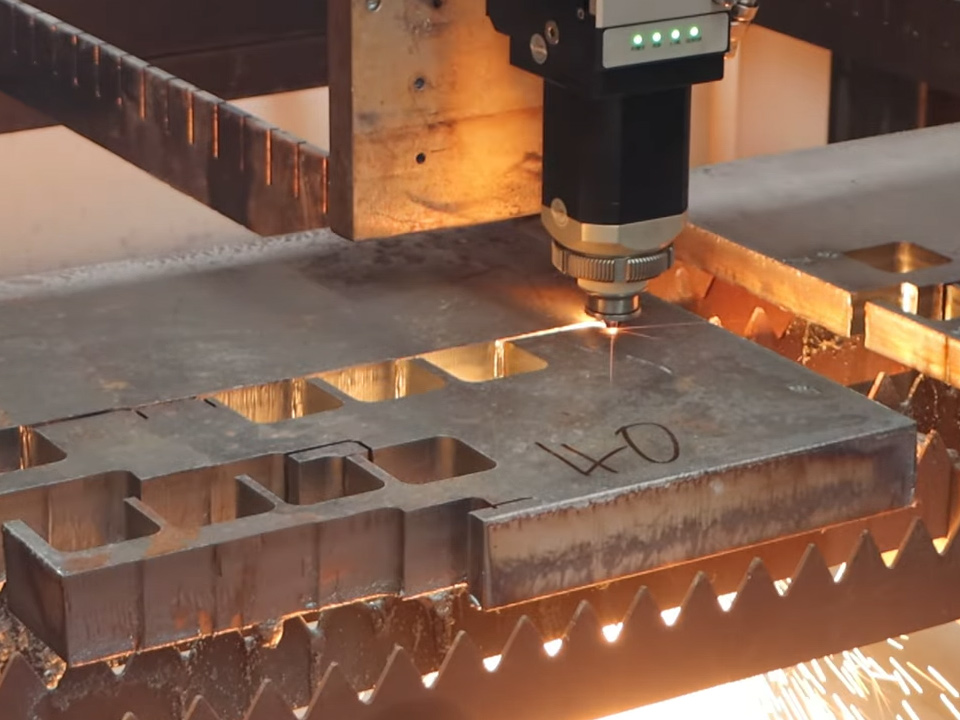
A modern fiber laser really can cut thick plate. TRUMPF’s current brochure says its 24 kW systems can process mild steel, stainless steel, and aluminum up to 60 mm, while copper goes to 15 mm and brass to 12 mm. And on a separate machine page, a 12 kW-class TruLaser setup lists 32 mm mild steel with a thick-sheet cutting package, 40 mm stainless steel, and 30 mm aluminum. Serious stuff. Real numbers. But not a blank check for every shop floor.
So yes—the number is real.
But here’s the ugly truth: “machine can cut it” and “shop should quote it every week” are two very different animals, and people in this business blur that line on purpose because maximum thickness sounds sexy while stable throughput sounds boring.
Fiber laser cutting thickness is a process stack problem, not a wattage flex
Power matters. Obviously.
But once you get out of brochure theater and into real production, thickness becomes a stack-up problem, and that stack includes beam parameter drift, nozzle centering, gas purity, standoff control, pierce logic, plate flatness, material condition, and the operator’s willingness to stop pretending a bad recipe is “close enough.”
That’s where the grown-up conversation starts.
NIST made a pretty dry but important point in its 2025 assessment of FY2024 work: modern commercial manufacturing and cutting tools already use advanced health-monitoring and sensor technologies. I read that as a warning, honestly. Shops that are serious about thicker sections aren’t winging it anymore—they’re watching the cut, the machine, and the process window in real time because variance gets expensive fast.
And this part matters.
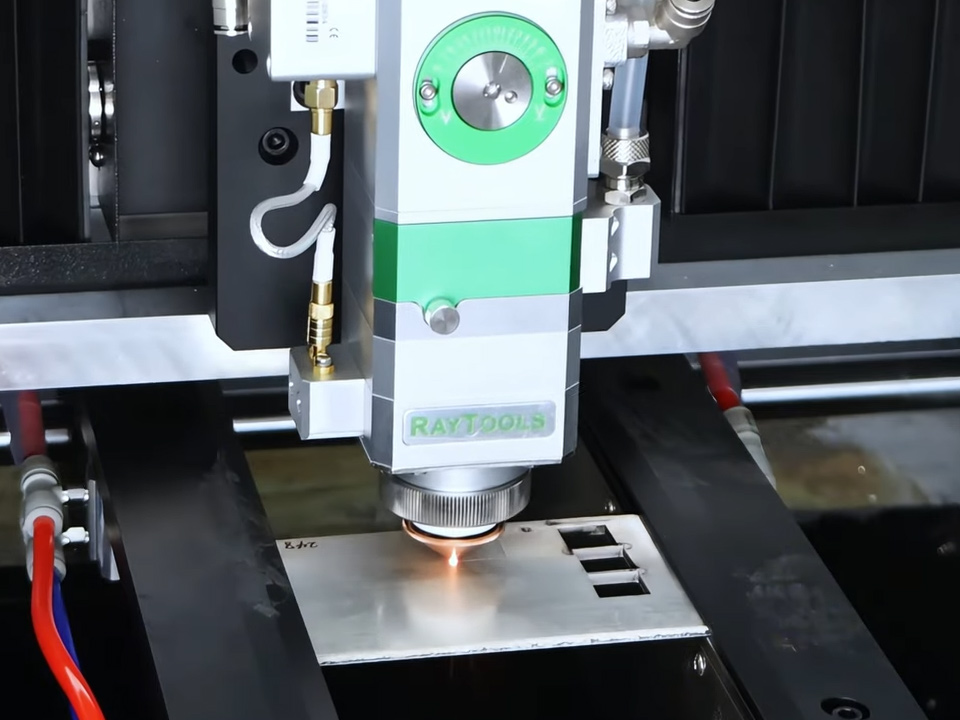
A shop can look sharp on 3 mm stainless. Fine. It can still look competent on 10 mm or 12 mm. But push into 20 mm, 25 mm, or beyond—and suddenly every lazy habit, every half-baked gas setup, every “we usually run it like this” shortcut starts showing up in the parts. Edge wash. Hanging dross. Pierce drama. Lost time. Rework. You know the routine.
A practical fiber laser cutting thickness chart for production buyers
I wouldn’t buy off a single ceiling number. Never have.
What I’d want is a range—one range for what’s comfortable and repeatable, another for what’s possible if the shop actually knows what it’s doing, and then a published upper-end example from current OEM literature just to keep everybody honest. That’s a much better way to read fiber laser cutting thickness in production.
| Malzeme | Conservative production range | Aggressive production range | Published upper-end examples |
|---|---|---|---|
| Mild steel | 1–20 mm | 20–32 mm | up to 60 mm on 24 kW systems |
| Paslanmaz çelik | 1–15 mm | 15–40 mm | up to 60 mm on 24 kW systems |
| Alüminyum | 1–12 mm | 12–30 mm | up to 60 mm on 24 kW systems |
| Copper | 1–6 mm | 6–12 mm | up to 15 mm on 24 kW systems |
| Brass | 1–6 mm | 6–10 mm | up to 12 mm on 24 kW systems |
| Titanyum | 1–4 mm | 4–6 mm | up to 6 mm on 24 kW systems |
And no, I wouldn’t let a supplier hide behind that last column.
If they jump straight to the published max without talking about feed rates, assist gas, edge quality, pierce delay, or whether that thickness is actually quoteable on a production schedule, I’d assume I’m being sold a stunt number. Because I probably am.
How thick can a fiber laser cut before quality starts slipping?
Earlier than most sales decks admit.
That’s the honest answer, and I don’t think the industry says it enough, because everyone likes showing the clean coupon from the one successful pass while nobody seems eager to show the ugly stack of rejected parts that got them there.
A 2024 study indexed by the Harvard ADS database looked at high-power fiber laser cutting of stainless steel plates from 10 mm to 60 mm. That matters. It tells you the technical frontier is moving. Good. But frontier work and boring, reliable production are not the same thing—not even close. Another 2024 study on carbon and stainless plates found that accuracy and cut quality still shifted a lot with speed and parameter changes across thicknesses, which is exactly what experienced shops already know in their bones.
So yes. The ceiling is climbing.
But production doesn’t magically get easier just because the machine brochure got bolder.
What usually goes sideways first
Not one thing.
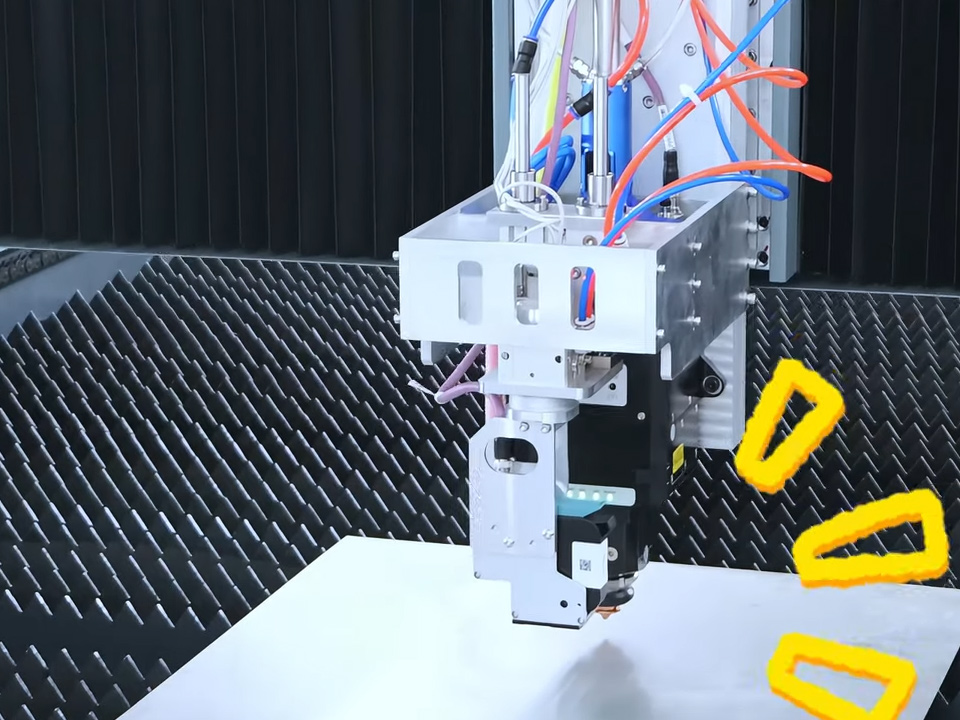
Usually it’s a pile-up—pierce time stretches out, the kerf gets moodier, thermal loading becomes less forgiving, assist gas quality starts mattering more than people want to admit, and batch-to-batch variation that looked harmless on thin stock suddenly bites you hard on thicker plate.
That’s why I pay attention when OEMs talk about process packages instead of just wattage. TRUMPF, for example, highlights CoolLine for 15–25 mm mild steel and says certain automation features can reduce scrap by up to 30% on some systems. That doesn’t sound glamorous. Good. It sounds real.
Because thick work exposes nonsense.
And the shops that survive in thick plate don’t survive because they have the flashiest ad. They survive because they’ve got the gas train sorted, the recipes locked down, the lens/nozzle housekeeping under control, and somebody on the floor who knows when the cut is drifting before the machine fully gives itself away.
The industry incentive to oversell thick-plate capacity
Here’s the ugly truth.
Maximum thickness sells machines. Stable production doesn’t fit neatly into a banner ad.
And when the market tightens, the incentive to overstate what a machine can “handle” gets even worse, because nobody wants to be the salesperson saying, “Actually, the profitable range is lower than the headline number you saw online.” That’s not a fun meeting.
Reuters reported in April 2024 that Eurofer cut its 2024 EU steel demand outlook again, trimming expected growth to 3.2% and citing economic uncertainty, geopolitical tensions, and high interest rates. That matters because softer demand makes capital equipment marketing noisier, not calmer.
So when somebody tells you their machine cuts thick plate, fine—maybe it does.
But if they can’t show test parts, material grade, gas spec, cutting speed, edge photos, and pierce behavior, then what they’ve really shown you is a sentence. That’s all.
Production cutting thickness fiber laser buyers should press on before signing
Don’t ask lazy questions.
Ask the stuff that makes people uncomfortable.
Material-specific thickness, not marketing thickness
“Mild steel up to 30 mm” is one of those lines that sounds useful until you actually need to quote parts. Is that A36? S235? Hot rolled? Pickled? Scaled? Flat? Clean? Because material condition can quietly wreck a recipe that looked fine on paper.
That’s where deals go bad.
Oxygen or nitrogen strategy
Everybody likes talking about kW. Fine. But gas strategy is where costing gets real. Thick carbon steel may go farther under oxygen-assisted cutting, but edge condition and downstream finishing can change the economics. Stainless and aluminum? Different headaches. Different gas burden. Different cut behavior.
No free lunch.
Pierce time per part
This one gets buried all the time, and it shouldn’t. A machine might technically cut the thickness you care about, but if every part spends forever in pierce and the cycle time balloons, your piece cost gets ugly before you even start arguing about edge quality.
That’s not a small detail. That’s the quote.
Monitoring and closed-loop control
This is the part old-school buyers still underestimate. Thick-section work at the high end isn’t just about throwing photons at metal. It’s about sensing, correction, consistency, and not letting process drift snowball into scrap. Again, the NIST assessment says more than enough if you read between the lines.
Where different machine categories fit
Not every buyer needs the same rig.
If your mix includes both sheet and tube, an all-in-one fiber laser metal cutting machine for tube and sheet processing can make operational sense—but only if the part mix is real and you’re not buying flexibility you’ll never use.
If flat-sheet throughput is the main game, I’d still look first at a dedicated fiber lazer kesim makinesi. Cleaner workflow. Fewer compromises. Usually.
And if you’re dealing with reflective non-ferrous material, tiny-feature work, or smaller precision jobs, a fiber laser cutting machine for brass, gold, and silver belongs in the conversation because copper-alloy behavior and thin-gauge precision aren’t the same beast as heavy mild-steel plate.
One more thing—and people skip this too fast. If you’re still comparing process categories, read the gap between a fiber lazer kesim makinesi ve bir CO2 laser engraver cutter. Not because CO2 has vanished. It hasn’t. But because the thickness story changes once you start factoring maintenance, beam delivery, service burden, and the actual production mix on your floor.
Best fiber laser for thick metal cutting? Usually not the loudest machine in the room
I’ll say it plainly.
The best fiber laser for thick metal cutting is usually not the machine with the most dramatic brochure claim. It’s the machine with the fattest usable process window—the one that keeps its act together on real plate, with sane gas usage, predictable pierce behavior, repeatable edge quality, and recipes that don’t fall apart the moment stock condition gets a little ugly.
That’s the machine I’d want.
From my experience, I’d take a system that lives happily in the 20 mm to 25 mm zone all month long over a machine that once clipped 40 mm in a polished demo while three application engineers hovered nearby tweaking everything like it was a Formula 1 pit stop. That kind of “success” is expensive theater.
Looks impressive, though.
What thickness can fiber laser machines cut in production, really?
Here’s my answer, stripped of the sales varnish.
For a lot of shops, the sweet spot sits below the advertised ceiling. Thin and medium gauge work is still where fiber lasers feel strongest on speed, cost, and repeatability. Once you start shoving into thick stainless, thick aluminum, or heavier carbon plate, the question stops being general and gets painfully specific—what material, what chemistry, what gas, what tolerance band, what edge spec, what batch size, what reject rate, what shift pattern?
That’s the real conversation.
Not “Can it cut it?” but “Can you build a business around it without drama?”
SSS
What is fiber laser cutting thickness?
Fiber laser cutting thickness is the maximum material thickness a fiber laser system can process to a usable standard, which in real production depends on laser power, beam quality, assist gas, pierce strategy, material grade, and the shop’s tolerance for burr, taper, speed loss, and scrap. Published machine limits can be far higher than a shop’s safe day-to-day operating range.
In plain shop-floor terms, it’s the gap between a machine barely severing a plate and that same machine making sellable parts all day without wrecking your timing, edge quality, or scrap numbers. The second number is the one that matters.
How thick can a fiber laser cut?
A fiber laser can cut from thin sheet up to very thick plate, with current OEM literature showing examples as high as 60 mm in mild steel, stainless steel, and aluminum on 24 kW systems, though many shops run lower thicknesses for stable quality and better economics.
That’s why I don’t love this question by itself. A lab-style max cut and a quoteable production cut are different things, and buyers who mix them up usually end up disappointed.
What is the maximum fiber laser cutting thickness for stainless steel?
The maximum fiber laser cutting thickness for stainless steel in current published high-end OEM examples reaches 60 mm on 24 kW-class systems, but stable production capability is often lower and depends heavily on beam tuning, nitrogen strategy, pierce recipe, and edge-quality targets.
So yes, the upper limit can look huge on paper. But paper doesn’t show the ugly bits—pierce delays, speed drops, edge inconsistency, or the jobs that only work when every process variable behaves.
Your Next Steps
Don’t shop by headline number.
Send suppliers your real materials, your real thicknesses, your real tolerance demands, and your real edge expectations. Then ask for test cuts with speed, gas, and pierce data attached—not just a glossy promise. Make them separate “can cut” from “can produce profitably.”
That’s how you avoid buying a brochure.
And if you want to narrow the field by application type first, start from the main fiber laser cutting machine category and then compare based on whether your jobs are mostly flat sheet, mixed tube-and-sheet, or reflective non-ferrous work.


Sıcak Tıklama
Bize Ulaşın
Uygulama
©Copyright [bogonglaser.com]. BOGONG Laser Machine Supplier All Rights Reserved.