-
Shunhua Yolu, Jinan Şehri, Shandong

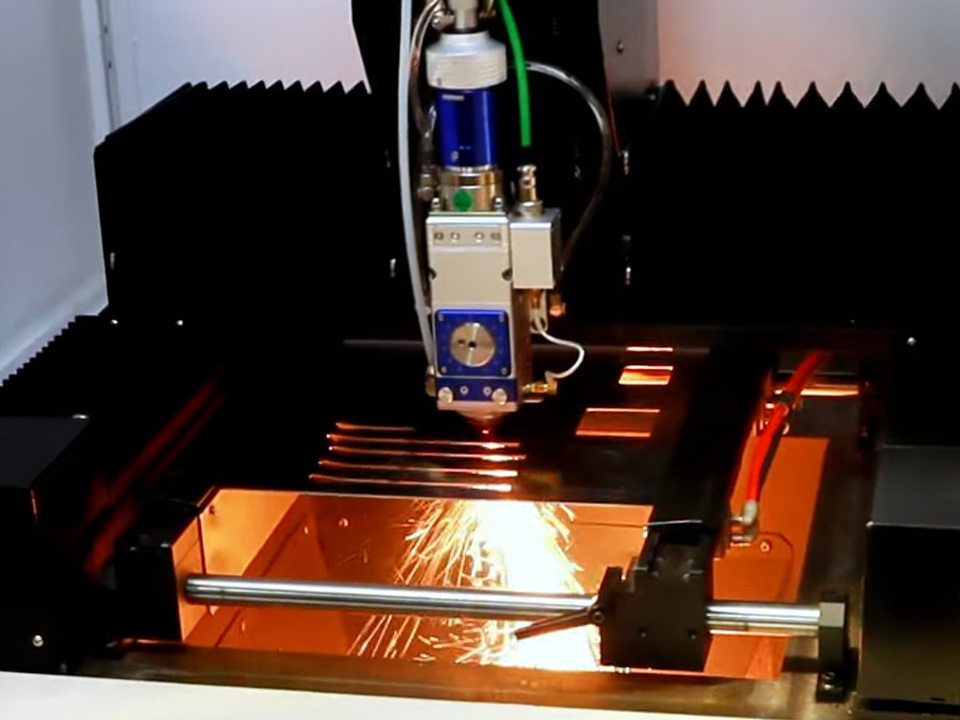
Industrial Advantages of Laser Metal Cutting Machines
Laser metal cutting machines sell on speed and precision. That’s the easy part. The harder truth is that their real industrial value shows up in labor compression, digital repeatability, scrap visibility, and how well they plug into automation. This piece breaks down where they truly win, where they disappoint, and what skeptical buyers should check before signing anything.

The sales pitch is easy. The factory math is not.
Laser sells fast.
Walk through any trade show long enough and you’ll hear the same tune over and over—faster cuts, tighter tolerances, smarter controls, cleaner edges, lower labor—and, yes, some of that is true, but most of the pitch is polished to the point where it stops sounding like manufacturing and starts sounding like theater. That’s the problem.
So what’s real?
I frankly believe the real industrial advantages of laser metal cutting machines have almost nothing to do with the show-floor nonsense and almost everything to do with whether the machine can keep parts moving, keep scrap visible, keep setup drift under control, and keep the whole line from turning into a finger-pointing contest by second shift. That’s where money leaks. Quietly. And that’s where good equipment earns its keep.
And no, I’m not talking about brochure wins. I’m talking about shop-floor wins—the kind nobody brags about because they’re boring: fewer remakes, fewer “who changed the parameters?” arguments, fewer nests wasted because someone rushed the setup, fewer pallets of semi-good parts sitting next to the brake waiting for a miracle. Real factories know that story.
Here’s the ugly truth: a lot of people shopping for lazer metal kesme maki̇neleri̇ still buy with their eyes. They stare at wattage, screen graphics, enclosure styling, maybe a slick video of a head zipping across sheet at cartoon speed. Fine. But a machine isn’t “best” because it looks fast. It’s best when the same DXF file run three weeks later still gives you the same usable part, with less operator babysitting and less downstream pain. That’s the real test. Not the dog-and-pony demo.
And the backdrop here matters. The International Federation of Robotics 2024 report said global robot density reached 162 units per 10,000 employees in 2023, more than double the level of seven years earlier, and its separate 2024 release counted 4,281,585 robots operating in factories worldwide. That isn’t trivia. That’s the operating climate now. Your cutting cell is not living in 2014 anymore, even if your purchasing habits still are.
Where laser cutting machine advantages actually show up
Precision is nice. Repeatability pays.
Sure, the cut looks good.
But that’s not why shops stick with laser once the honeymoon wears off. They stick with it because repeatability pays rent. Same file. Same recipe. Same geometry. Less operator improvisation. Less “close enough” nonsense. Less post-cut triage when parts hit forming or fit-up and somebody realizes the dimensional drift is now everyone’s problem. That’s what precision metal laser cutting technology is supposed to fix—not just aesthetics, but process discipline.
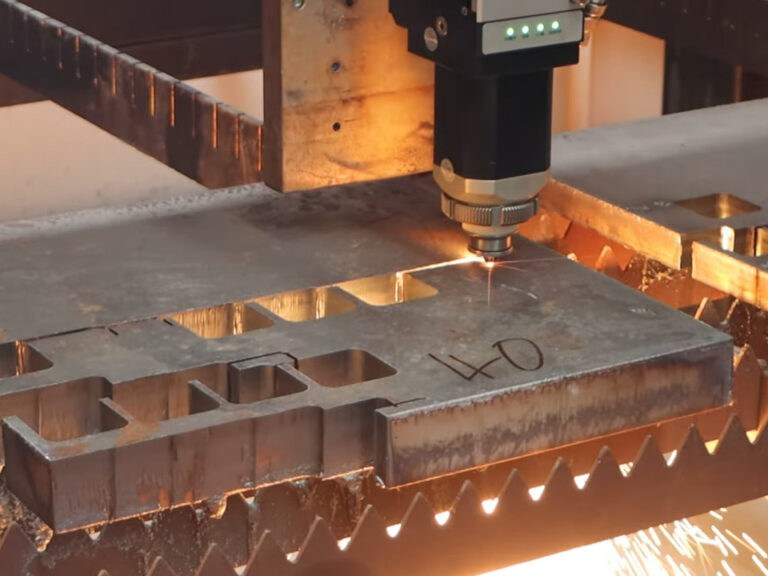
Bogong’s high-power fiber laser metal cutting machine is a good example of how wide the range has gotten: the published specs list cuts up to 25 mm carbon steel, 18 mm stainless steel, 16 mm aluminum, and 10 mm copper or brass, while the broader fiber lineup describes 1,500W to 60,000W platforms and speeds above 120 m/min in suitable conditions. On paper, that covers a lot of ground. In practice? It only matters if the machine can hold stable production instead of just impressive numbers.
And this is where buyers trip themselves up. They ask, “How fast does it cut?” Fair question, I guess. But from my experience, the better question is uglier: “How often does it cut right when the shift is tired, the queue is stacked, and the operator has six other things going on?” That’s the part sales decks skip. Usually on purpose.
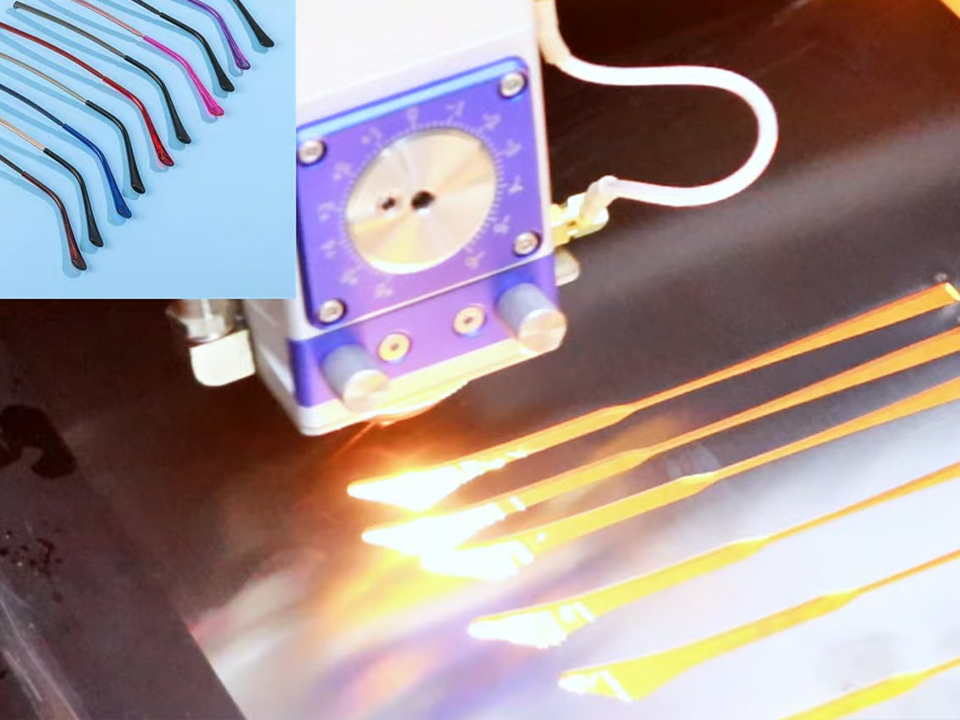
Labor compression is the hidden story
Nobody says it.
But labor is the subtext behind almost every serious machine purchase now, especially in shops that can still win work but can’t reliably staff the right mix of operators, handlers, programmers, and maintenance people across all shifts without somebody burning out or quitting at exactly the wrong moment. That pressure is everywhere.
Reuters reported in April 2024 that factory work in the United States fell to a record-low 8.2% of total employment in February, down 13.8 percentage points from the 1979 peak. The National Association of Manufacturers said in its 2024 Q3 survey that attracting and retaining a quality workforce remained a major concern after topping the list for years. So when people ask me how laser metal cutting machines improve efficiency, I don’t start with beam quality. I start with labor fragility. That’s the actual pressure point.
That’s also why an automatic loading laser tube cutting machine isn’t just a “nice feature” add-on. Bogong’s published setup highlights three-chuck clamping, automatic alignment, optional loading and unloading, double pulling for long parts, and support systems designed to reduce sagging and protect accuracy. Strip the marketing varnish off that, and here’s what’s left: fewer human touches, fewer opportunities to screw up the handoff, fewer chances for a skilled machine to sit idle because material flow is clumsy.
Here’s the ugly truth again: a lot of bad ROI stories blamed on the beam are actually loading problems, queueing problems, nesting problems, or plain old workflow rot. The laser head gets blamed because it’s expensive and visible. The real bottleneck is usually somewhere more embarrassing.
Flexibility beats dedicated tooling when SKU churn gets messy
Short runs happen.
And revision-heavy work, customer changes, weird batch sizes, mixed alloys, last-minute geometry edits—this is normal now, not some annoying edge case. That’s exactly where the laser cutting machine advantages become obvious. Geometry changes live in software. Parameters can be adjusted without dragging the job through a tooling graveyard. You don’t wait around for a hard tool, then pretend the delay was unavoidable. You just move.
For smaller production cells, detailed blanks, development parts, or compact-facility work, a platform like the 5050 small fiber laser cutting machine often makes more sense than buying oversized capacity just to feel “industrial.” I’ve seen this mistake a lot. Shops buy swagger. What they needed was fit. There’s a difference.
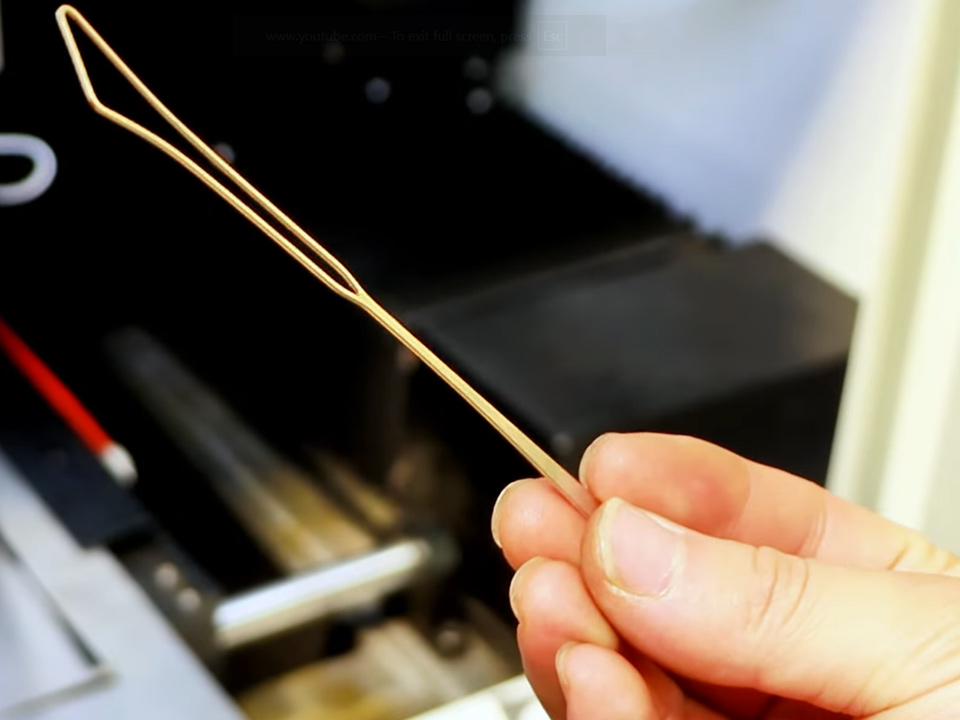
The industrial advantages, without the fairy dust
I’d rather show it this way.
| Industrial factor | Laser metal cutting machines | Traditional tooling-heavy cutting routes |
|---|---|---|
| Part changeovers | Fast, software-driven, better for mixed SKUs and revision-heavy work | Slower when tooling changes or manual reset dominates |
| Operator dependence | Lower when nesting, recipes, and loading are standardized | Often higher, especially in setup-heavy workflows |
| Scrap visibility | Easier to measure and tie back to files, nests, and jobs | Often buried across manual steps and operator handoffs |
| Automation fit | Strong, especially with loading, unloading, monitoring, and MES-style workflows | Varies widely; some older processes integrate poorly |
| Small-batch economics | Often better for short runs and varied geometries | Can be weaker when tooling amortization is poor |
| Fume/compliance burden | High if poorly controlled; demands ventilation and filtration discipline | Also present in many thermal processes, but laser is not exempt |
That last line matters.
Because too many people still talk about metal laser cutting equipment like it’s automatically clean, tidy, and low-drama just because it’s digital. It’s not. It can be disciplined. It can be efficient. It can also become a compliance mess if the extraction, filtration, housekeeping, and process segregation are half-baked. Fancy HMI. Dirty air. I’ve seen versions of that movie before.
The part nobody likes to discuss: safety, fumes, and regulation
Let’s not fake this.
OSHA states that laser hazards are covered by specific general-industry standards, and its technical manual says adequate ventilation must be installed to keep fumes and vapors from laser cutting and welding below applicable exposure limits. That isn’t background noise. That’s operating reality. If a supplier tries to glide past it, I’d pay closer attention, not less.
And the pressure is getting sharper, not softer. In August 2024, South Coast AQMD’s proposed Rule 1445 targeted toxic emissions from laser and plasma arc metal cutting, explicitly pointing to pollutants including nickel ve hexavalent chromium and proposing requirements around control devices, building enclosures, housekeeping, monitoring, source testing, and recordkeeping. That’s not a fringe regulatory footnote. That’s the direction of travel.
So yes, laser metal cutting machines can improve throughput. Absolutely. But if the ventilation design is weak, if the dust collector is undersized, if the capture strategy is lazy, if nobody wants to talk about stainless fumes after the PO is signed—then the “efficiency” story gets real expensive, real fast. Don’t ignore that part. Don’t outsource your skepticism either.
What the best laser metal cutting machines for industrial use have in common
They fit the workflow, not just the spec sheet
This matters more.
I’ve watched buyers obsess over wattage like it’s a personality trait while ignoring what happens before the cut and after the cut—the material staging, the nesting logic, the unload rhythm, the fit-up at welding, the traceability mess, the queue pileups, the shift-to-shift inconsistency. That’s backwards. Badly backwards.
The best laser metal cutting machines for industrial use usually have four things going for them: they match the shop’s actual part mix, they reduce handling drag, they repeat well without constant fiddling, and they plug into the rest of production without creating new choke points. Bending. Welding. Marking. Packing. If those links are shaky, the cutter won’t save you. It’ll just expose you faster.
That’s why I don’t like thinking in single-machine terms unless the application is very narrow. A cutting investment often makes more sense as a cell decision. If the end product is a welded assembly, then a floor-type laser welding machine belongs in the conversation earlier than most buyers expect. And if serials, logos, QR marks, or part ID matter, a taşınabilir lazer kazıyıcı may close a gap that otherwise gets patched with a sloppy secondary process later. That’s not feature creep. That’s production logic.
They generate usable data, not decorative dashboards
Another hard truth.
Factories do not need more screen candy. They need job-level truth—alarm history, nesting yield, cut uptime, operator touches, downtime causes, scrap by job, repeat-job consistency, actual output by shift. That’s the difference between a basic cutter and a real industrial laser cutting system. One gives you movement. The other gives you signal.
And again, this is where the broader market is already voting with capex. IFR’s 2024 data showed annual installations above 500,000 robots for the third straight year. If your machine can cut but can’t really participate in an automated production environment, then it may still run fine—but strategically, it’s aging on arrival. That sounds harsh. I think it’s just accurate.
SSS
What are the industrial advantages of laser metal cutting machines?
Laser metal cutting machines deliver industrial value by combining high geometric precision, repeatable digital workflows, lower manual setup dependence, fast part changeovers, and strong automation compatibility, which together reduce rework risk, improve throughput stability, and make mixed-SKU metal production easier to manage at scale.
But that’s the clean answer. The rougher answer is this: they help when you’re trying to remove chaos from production. Less fiddling. Less rework. Less operator heroics. More predictable output.
How do laser metal cutting machines improve efficiency?
Laser metal cutting machines improve efficiency by turning digital part files into repeatable output with fewer manual adjustments, faster job transitions, better material utilization, and cleaner integration with loading systems, monitoring tools, and other automated production steps that reduce idle time and operator-driven variability.
From my experience, that efficiency only shows up fully when the handling side isn’t a mess. The beam matters, sure. But flow matters more than people want to admit.
Are fiber laser systems the best option for modern metal fabrication?
Fiber laser systems are often the best option for modern metal fabrication when shops need fast metal processing, tight tolerances, short-run flexibility, and compatibility with automation, especially across carbon steel, stainless steel, aluminum, copper, and brass in digitally managed production environments.
Usually, yes. Always, no. If your real bottleneck is material handling, quoting, nesting discipline, or downstream weld capacity, a bigger machine won’t magically fix your shop.
Final thoughts: buy less fantasy, more throughput truth
This is my take.
Bu benefits of laser metal cutting machines are real, but they are constantly dressed up in vague language that sounds impressive and says very little. The real upside is disciplined throughput: repeatable parts, lower labor dependence, faster changeovers, stronger automation fit, clearer scrap visibility, cleaner response to design change, and better control over what the line is actually doing. That’s the substance. Everything else is stage lighting.
So if you’re evaluating equipment now, start with your pain map—not the shiny brochure. Look at whether a high-power fiber laser metal cutting machine actually fits your thickness window, whether an automatic loading tube cutting system can remove handling drag, whether a 5050 small fiber laser cutting machine makes more sense for compact or prototype-heavy work, and whether a floor-type laser welding machine veya portable laser engraver for traceability should be treated as part of the same production logic instead of last-minute patchwork. That’s how serious capex gets evaluated—messy, specific, and grounded in throughput truth.


Sıcak Tıklama
Bize Ulaşın
Uygulama
©Copyright [bogonglaser.com]. BOGONG Laser Machine Supplier All Rights Reserved.