-
Shunhua Yolu, Jinan Şehri, Shandong

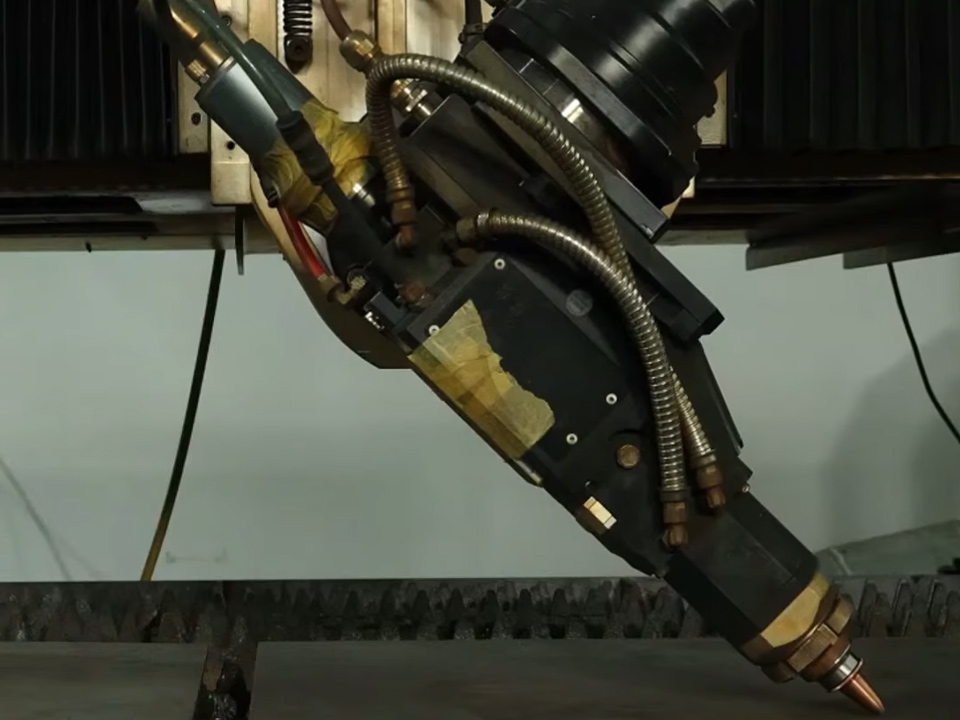
Best Laser Cutting Solutions for Data Center Hardware Manufacturing
AI infrastructure did not just increase server demand. It changed the metalwork math. In this piece, I break down where sheet metal laser cutting actually pays off in data center hardware manufacturing, where it gets oversold, and what buyers should test before they trust any supplier.

I’ll be blunt. Most sheet metal shops talk like they’re building the future, but half of them still struggle with the boring stuff—flatness, hole drift, edge cleanup, coating fit, real repeatability after bending, the kind of factory-floor details that decide whether a server chassis goes together cleanly or turns into a rework circus at the assembly bench.
And honestly, this is where a lot of buyers get fooled. They hear “fiber laser,” they see a shiny machine video, they get a neat PDF, and suddenly everyone acts like the supplier has solved data center hardware manufacturing. No. Not even close. According to a DOE-backed 2024 LBNL report on U.S. data center energy use, U.S. data center electricity use rose from about 58 TWh in 2014 to about 176 TWh in 2023, with projections reaching 325 to 580 TWh by 2028. That’s not some abstract policy number. That’s pressure—real pressure—moving backward through the supply chain and landing straight on server chassis manufacturing, rack fabrication, enclosure thermal design, and the sheet metal laser cutting shops that now have to produce cleaner parts, faster, with fewer excuses.
So what’s really changed?
The enclosure stopped being “just a box.” That’s the shift. In 2024, Reuters reported that Dell and Super Micro were set to provide server racks for xAI’s supercomputer, and I think that detail matters more than people admit, because the rack, the chassis, the cable path, the vent field, the bracket stack, the skin panels—all of that suddenly moved from background hardware to capacity hardware. In other words, the metalwork isn’t supporting the compute story anymore. It’s part of it.
Sheet metal laser cutting got promoted—whether factories are ready or not
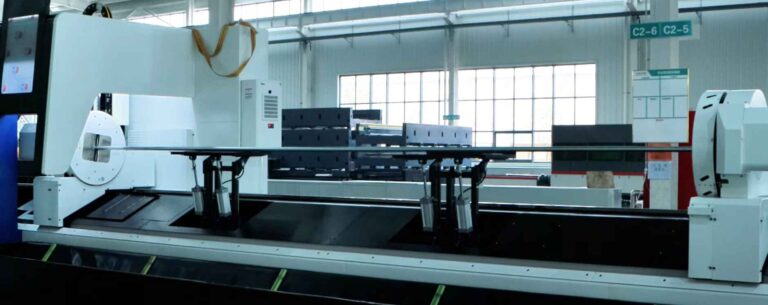
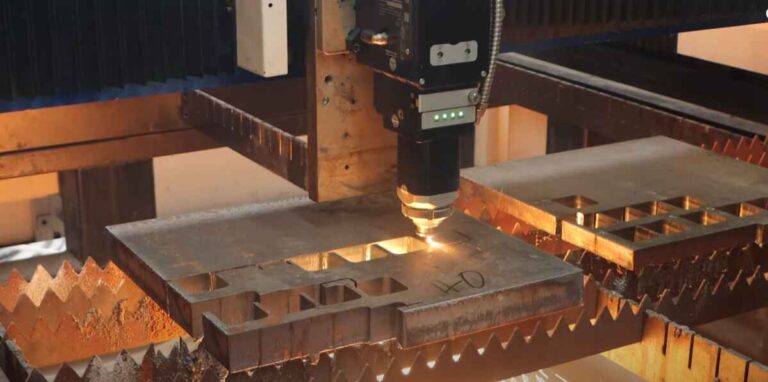
Short answer: sheet metal laser cutting is still the best default process for modern data center hardware manufacturing when you need repeatable geometry, fast design changes, dense feature sets, and scalable enclosure production without eating tooling costs too early.
A lot of factories own decent equipment and still produce mediocre server parts. I’ve seen it too many times. They’ll hold up a sample cover panel and brag about the finish while quietly avoiding any discussion about positional tolerance around PEM zones, distortion after welding, panel flushness, or whether the bend deduction was corrected after the latest ECO. That’s the stuff that matters. Not the slideshow.
And the market doesn’t care that your process is “still being optimized.” Reuters reported in August 2024 that Dell’s AI-optimized server demand rose about 23% sequentially to $3.2 billion, with backlog at $3.8 billion. Read that again and think like a production manager, not a marketer: more demand, more speed, more revision pressure, less room for sloppy execution. That’s exactly why best laser cutting solutions for server chassis can’t be judged by machine wattage alone. You have to judge the whole workflow—cut, deburr, form, weld, clean, inspect, coat, pack. Miss one step and the whole line starts bleeding time.
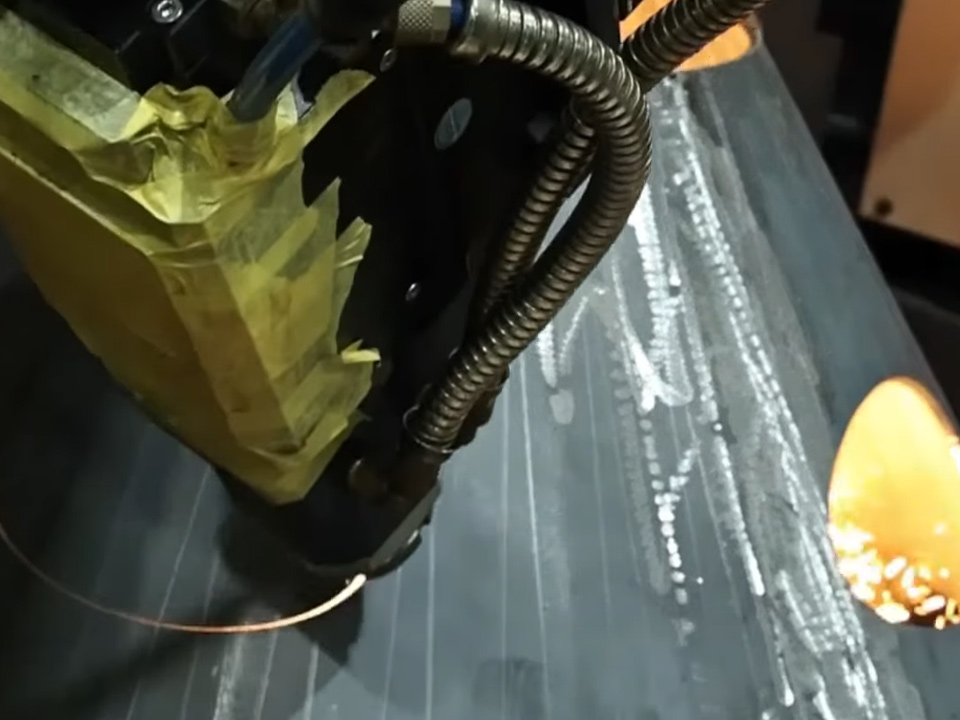
Why laser often beats punching in server chassis manufacturing
But for a lot of current data center hardware manufacturing work, especially where airflow patterns change, mounting geometries evolve, or enclosure variants keep multiplying, laser cutting has a big edge because it lets engineering teams revise without running back to tooling every five minutes. That alone saves pain. You can shift vent arrays, change slot geometry, move fastener positions, tweak cable pass-throughs, and push prototypes into actual production without acting like every design change is a small legal dispute.
That flexibility matters now more than it did a few years ago. Reuters reported in March 2024 that Foxconn expected AI server sales to jump 40% in 2024, which tells me the pressure isn’t just on chip makers or OEMs. It spills straight into the metal shops handling laser cutting services for server racks, enclosures, covers, and internal bracketry. When the SKU mix gets twitchy, punching starts feeling rigid. Laser doesn’t.
Laser cutting can still go wrong in very ordinary ways—heat tint, rough vent edges, dross on thicker stock, bowing on wide flats, cosmetic scratches from bad handling, and the classic one: perfect flat pattern, messy formed part. From my experience, buyers who only ask “What machine do you use?” are asking the least useful question in the room.
Precision laser cutting for enclosures is really about fit-up, airflow, and avoiding stupid mistakes
Tiny geometry errors turn into expensive nonsense.
That’s especially true in precision laser cutting for enclosures, because a small miss on one panel doesn’t stay small for long. It becomes rail interference, crooked fit-up, ugly door gaps, grounding trouble, fan clearance issues, or a last-minute hand-grind fix some poor technician has to do while everyone pretends the line is “on schedule.” I frankly believe this is where weak suppliers get exposed fastest. Not in quoting. In assembly.
And the thermal penalty is real. The DOE announcement summarizing the 2024 LBNL report said data center load growth has tripled over the past decade and is projected to double or triple again by 2028. That matters because higher power density changes what “acceptable” metalwork looks like. Suddenly vent geometry, service cutouts, stiffener placement, airflow zoning, and even how a door panel sits under load start affecting the bigger system story.
Vent fields and airflow zones aren’t cosmetic
Too many people still treat venting like decoration—just a pattern to make the box look technical. That’s amateur thinking. In server chassis manufacturing, vent fields shape pressure drop, cooling path behavior, noise, and thermal consistency across loaded hardware. Laser cutting gives engineers much more freedom to iterate those patterns without a tooling headache, which is exactly why it keeps winning in custom laser cut data center enclosures.
And the pressure keeps rising. Reuters reported in October 2024 that Super Micro had recently deployed more than 100,000 GPUs with direct liquid cooling for some of the largest AI factories ever built. That doesn’t make airflow irrelevant. It makes enclosure design more complicated. Liquid cooling hardware still lives inside metal systems full of brackets, routing constraints, removable skins, service panels, and mixed thermal logic. Anyone telling you the sheet metal no longer matters hasn’t spent enough time near real hardware.
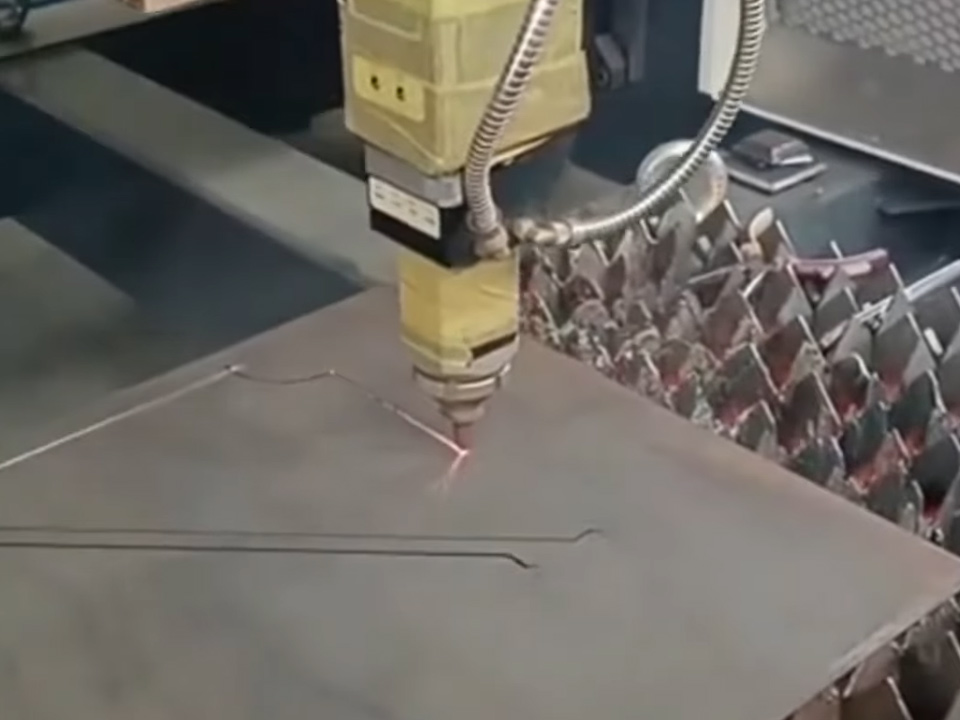
Brackets, rails, tabs, and cable cutouts—the “small” stuff that actually bites
A cutout that’s half a millimeter off doesn’t sound dramatic until the cable bundle starts rubbing, the latch alignment feels wrong, the rail sits tight on one side, or the assembly tech reaches for a file because the part “almost” fits. Multiply that by a few hundred units and you’ve got margin loss dressed up as normal production. This is why good sheet metal fabrication for data centers has to look beyond panel cutting and into actual assembly behavior.
Downstream process sanity matters more than most buyers realize
Production doesn’t. Production goes through cutting, deburring, bending, insert insertion, frame welding, surface cleanup, coating prep, final inspection, and pack-out. One dirty edge or one distorted joint can make the rest of the route uglier than it needed to be. That’s why I like suppliers who understand the whole metal chain, not just one step of it. For example, support processes like handheld laser welding for frame joints and bracket rework, CCD-assisted laser welding for fine alignment tasksve pulse laser cleaning for oxide and residue removal before finishing aren’t side topics. They’re part of whether the finished enclosure looks sharp or looks touched-up.
Sheet metal fabrication for data centers isn’t a “cheap metal” category anymore
Procurement teams still buy sheet metal fabrication for data centers like they’re buying generic industrial housings from 2018. That’s a mistake. The economics have changed because the hardware requirements changed, the deployment timelines changed, and the thermal stakes definitely changed. Reuters reported in May 2024 that data centers could consume up to 9% of total U.S. electricity generation by 2030, citing EPRI. When the end market is absorbing that kind of power and build-out pressure, the metalwork vendor is no longer some invisible low-value subcontractor. They’re part of the bottleneck chain.
And no, the cheapest quote usually isn’t the smartest buy.
The best supplier is usually the one that can cut accurately, revise fast, weld cleanly, clean surfaces properly, and tell you when your drawing is going to cause headaches on the floor. That last part matters most. I trust a factory that argues with a bad design more than one that smiles at everything and ships trouble later.
A practical comparison of common fabrication approaches
| Process | Best use in data center hardware manufacturing | Main advantage | Main weakness | My verdict |
|---|---|---|---|---|
| Fiber laser cutting | Server chassis panels, bracket systems, vented covers, custom enclosures | Fast revision cycles, complex geometry, good repeatability | Edge quality varies with setup and material thickness | Best default choice for most modern programs |
| CNC punching | High-repeat simple features, commodity panel runs | Good speed on repetitive patterns | Tooling limits design freedom, revision changes hurt | Fine for stable SKUs, weaker for fast-changing AI hardware |
| Turret punch + secondary ops | Mixed-volume enclosure work | Familiar workflow for many shops | More handling, more setup drag | Acceptable, but often not elegant |
| Waterjet cutting | Specialty materials or heat-sensitive cuts | Minimal heat-affected zone | Slower, rougher for many enclosure use cases | Niche, not my first choice for server rack programs |
| Laser + forming + welding + cleaning cell | Rack-scale assemblies and higher-value enclosures | Better process continuity and fewer surprises downstream | Requires disciplined integration, not just equipment ownership | The real winner when the factory knows what it’s doing |
That table is tidy. Real factories aren’t.
A good laser cutting services for server racks program is rarely about one machine. It’s about the cell. The route. The handoff quality between operations. If your cut parts are clean but your weld sequence pulls the frame out of shape, you lose. If the weld is fine but the oxide isn’t cleaned correctly before coating, you lose. If the coating’s good but the inserts were installed after the part already started drifting, you lose again. That’s why I pay attention to support tools like portable laser cleaning for maintenance and surface prep and even niche precision workflows that echo high-precision jewelry laser welding principles when the discussion gets into fine tabs, sensor brackets, or localized rework on small metal features.
The numbers smart buyers should keep in the back of their mind
The market is sending signals. Loud ones.
First, the 2024 LBNL report estimated U.S. data center power demand at roughly 176 TWh in 2023, up sharply from 2018 and likely to rise much further by 2028. I don’t read that as an energy headline only. I read it as a manufacturing warning. More compute density, more thermal stress, more enclosure pressure, more dependence on competent sheet metal laser cutting.
Second, Reuters reported in June 2024 that Dell and Super Micro were providing server racks for xAI’s supercomputer. That tells me rack-scale fabrication has moved closer to strategic infrastructure status. Not glamorous—but strategic.
Third, Reuters reported in January 2024 that Super Micro raised quarterly sales expectations to $3.6 billion to $3.65 billion from $2.7 billion to $2.9 billion. That kind of revision doesn’t just stress final assembly. It ripples all the way back into sheet supply, cut-part schedules, bend capacity, weld fixtures, coating queues, and enclosure pack-out.
So yes—I have a strong view here.
The shops that win this cycle won’t be the ones with the nicest branding. They’ll be the ones that understand how laser cutting improves server rack components at the ugly, practical level: tolerances, fit-up, burr control, revision speed, weld behavior, vent accuracy, and line discipline.
What I’d ask a supplier before I approved anything
Don’t ask soft questions.
If a supplier wants your server chassis or enclosure work, they should be able to answer the following without hiding behind generic factory language or vague “we have experience” filler.
Tolerance control
Can they explain hole-position tolerance, flatness, bend compensation, and inspection frequency like normal humans—or do they instantly drift into empty jargon?
Revision speed
How fast can they move from drawing change to first-article cut part? Not the fantasy answer. The real answer.
Edge quality and surface prep
How do they deburr? What happens to heat tint? How do they protect cosmetic faces before finishing? Do they even think about those questions?
Process integration
Can they only cut, or can they also support welding, insert work, cleaning, coating coordination, and packing logic for actual shipment?
Thermal and service awareness
Have they built parts for dense compute hardware before—real parts, not “similar industries”—with attention to airflow, cable routing, removable panels, service access, grounding, and interference zones?
If the answers sound foggy, I’m out.
SSS
What is sheet metal laser cutting in data center hardware manufacturing?
Sheet metal laser cutting in data center hardware manufacturing is the use of a high-energy laser beam to cut server chassis panels, rack parts, brackets, covers, and enclosure features from flat metal sheets with high repeatability, low tooling dependence, and fast design-change responsiveness for modern compute infrastructure. In simpler terms, it lets manufacturers produce complex metal parts for server and rack systems without being trapped by slow tooling changes every time engineering updates the design.
What should buyers check when choosing laser cutting services for server racks?
Buyers choosing laser cutting services for server racks should verify tolerance control, edge quality, revision speed, deburring methods, weld integration, surface cleaning, inspection routines, and prior experience with thermal-sensitive enclosure work, because machine ownership alone does not prove production competence. I’d also ask for first-article records, production photos, and examples of how the supplier handled change orders under deadline pressure.
Are custom laser cut data center enclosures worth the added engineering effort?
Custom laser cut data center enclosures are worth the added engineering effort when airflow paths, cable routing, component density, service access, grounding points, and rack integration requirements are specific enough that standard box geometries create thermal, assembly, or maintenance penalties later in the product lifecycle. My opinion? Usually yes. The pain of a lazy enclosure design nearly always shows up later—just when it’s most expensive to fix.
Your Next Step
If you’re sourcing best laser cutting solutions for server chassis or broader sheet metal fabrication for data centers, skip the generic capability pitch and ask for something more revealing: a manufacturability review of your real design, with notes on vent geometry, bend sequencing, insert zones, weld order, cleaning steps, and inspection control points.
That’s where the masks come off.
Because once a supplier starts talking concretely—really concretely—about how your enclosure will be cut, formed, joined, cleaned, and checked, you’ll know whether they actually understand data center hardware manufacturing or whether they’re just selling polished metal dreams.


Sıcak Tıklama
Bize Ulaşın
Uygulama
©Copyright [bogonglaser.com]. BOGONG Laser Machine Supplier All Rights Reserved.