-
Strada Shunhua, città di Jinan, Shandong

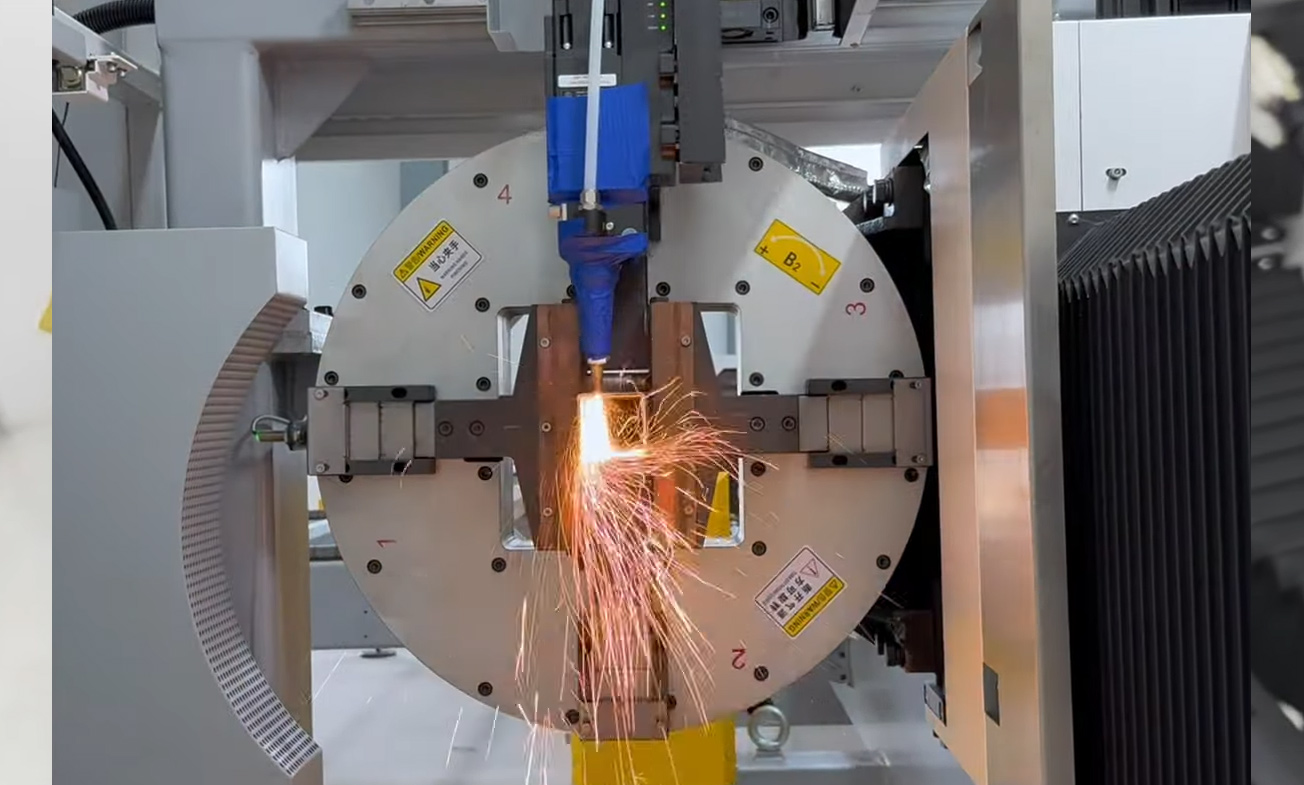
How Laser Cutting Machines Improve Precision Manufacturing
Precision manufacturing is not about buying a laser and hoping for clean edges. It is about controlling heat, motion, gas, nesting, tolerances, and inspection so scrap falls, rework shrinks, and throughput rises. This article explains where laser cutting machines actually improve precision manufacturing, and where sales talk usually outruns shop-floor reality.

Precision is not magic. It is process control.
Three words first.
I’ve watched factories spend six figures on laser cutting machines, brag about micron-level accuracy in meetings, then quietly bleed margin on warped sheets, dirty nozzles, sloppy nesting, unstable assist gas, and operators who keep nudging parameters by feel because nobody ever locked the cut window properly. That happens. A lot.
Why does that matter?
Because precision manufacturing doesn’t fail in the sales brochure. It fails at 4:47 p.m., when the second shift is rushing, the sheet stock isn’t flat, the focus is a hair off, and somebody still thinks “high power” is the same thing as process discipline. I frankly believe that confusion has cost the industry millions.
And yes, the pressure is real. The U.S. Bureau of Labor Statistics said nonfarm business labor productivity rose 2.3% in 2024, after 1.6% in 2023, while broader research from the New York Fed shows a much longer manufacturing productivity slowdown beneath the headline gains. That’s not abstract economist chatter. That’s a warning light. Productivity up 2.3 percent in 2024 e the New York Fed’s manufacturing productivity analysis say the same thing in different accents: factories need cleaner throughput, less hidden scrap, and fewer dumb process losses.
So, do laser cutting machines improve precision manufacturing? Yes. Absolutely. But not by magic. They improve it when the shop stops treating the machine like a trophy and starts treating it like part of a controlled system—beam delivery, gas purity, nesting logic, servo behavior, inspection routines, the whole messy stack.
That’s where macchine per il taglio laser in fibra start earning their keep. And when a shop actually studies its own laser cutting machine applications, the gains get clearer: narrower kerf, repeatable contours, less operator guesswork, less tool-wear drift, and fewer ugly surprises during bending or weld-up. That’s the real story. Not the showroom story.
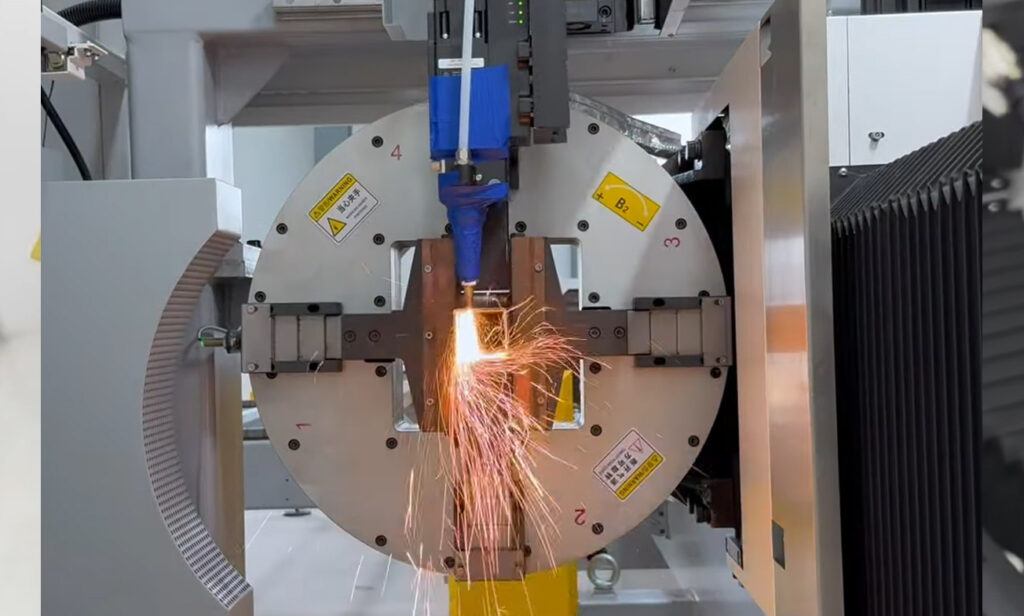
Where laser cutting actually beats old-school fabrication
It cuts cleaner.
Too simple? Fine. Here’s the ugly truth: a cleaner cut isn’t just a prettier cut. It changes everything downstream. Burrs turn into deburring labor. Taper turns into fit-up headaches. Bad edge condition turns into coating defects, warped assemblies, and then the customer starts asking annoying but fair questions. One messy cut can echo through three departments.
But this is where laser cutting in manufacturing usually has the edge—literally and financially. No physical tool is smashing into the part. No punch is slowly wearing out while everyone pretends the geometry is still “within tolerance.” No die set is bullying the design into shapes that are easy for tooling and bad for the product. The beam goes where the program says. Usually.
That matters more than many buyers admit. Especially in high-mix jobs.
If you’re cutting enclosure panels, chassis parts, brackets, machine guards, elevator skins, kitchen equipment, battery trays, or decorative stainless, the benefit isn’t just speed. It’s repeatability under real production conditions. Not theoretical conditions. Real ones. The stuff that happens after lunch, on the third batch, with a slightly different sheet lot.
And I’ll say this bluntly: too many buyers hunting for the best metal cutting laser machine are still asking the wrong first question. They ask, “How many kilowatts?” I’d ask, “What happens to hole roundness, edge oxidation, heat tint, and taper when you run your actual part family across three shifts?” That’s a grown-up question.
Here’s the comparison buyers should care about:
| Process factor | Mechanical cutting / punching | Macchine per il taglio laser |
|---|---|---|
| Tool wear impact | Edge quality drifts as tools wear | No physical cutting tool wear at the cut edge |
| Geometric flexibility | Lower on complex contours | High on complex contours and small features |
| Changeover time | Often higher with tooling changes | Lower for digital job switching |
| Burr and post-processing | Often more secondary finishing | Often less, if parameters are dialed in |
| Thin-sheet precision | Good, but tooling dependent | Excellent when beam, focus, and gas are stable |
| Heat impact | Lower for some mechanical processes | Can be controlled, but not ignored |
| Operator dependence | High in older workflows | Still important, but more software-driven |
Now, if the job involves weld-prep edges, angled profiles, or chamfer requirements, a system built for bevel fiber laser cutting and groove cutting can save a ridiculous amount of downstream fiddling. And if you’re bouncing between sheet and tube, an all-in-one fiber laser metal cutting machine for sheet and tube can reduce handling mistakes—small thing, maybe, until it isn’t.
The hidden mechanism: tolerance stacks shrink when variation shrinks
This is the real lever.
A lot of people talk about precision like it’s a machine feature, as if you buy a laser, plug it in, and suddenly every tolerance stack-up in the plant behaves. That’s fantasy. Precision comes from reducing variation, and laser cutting machines help when they keep the part closer to nominal from the first cut through the hundredth. Not glamorous. Very profitable.
NIST has basically said this for years: tighter tolerances improve quality, functionality, efficiency, and productivity. Dry wording. Solid point. NIST’s work on precision and tighter tolerances still lands because it describes the same thing every decent manufacturing engineer knows from painful experience—once variation drops, everything downstream gets less stupid.
Think about the chain. A narrow kerf preserves geometry better. Stable motion control keeps contour fidelity tighter. Digital nesting lowers human layout error. A locked parameter library means fewer cowboy adjustments at the console. CAD-to-cut flow shortens revision lag. Put all that together and manufacturing precision improvement stops sounding like marketing copy and starts looking like fewer NCRs, fewer re-cuts, and fewer last-minute saves in fabrication.
But—and this matters—a laser won’t rescue garbage inputs. Bad sheet flatness, oily surface contamination, cheap optics, nozzle damage, weak gas supply, drifting chillers, and lazy inspection can still wreck the job. I’ve seen shops blame the source when the real culprit was junk upstream discipline. That’s common. Embarrassingly common.
So yes, industrial laser cutting technology helps. A lot. But only when the shop behaves like a shop and not a PowerPoint deck.
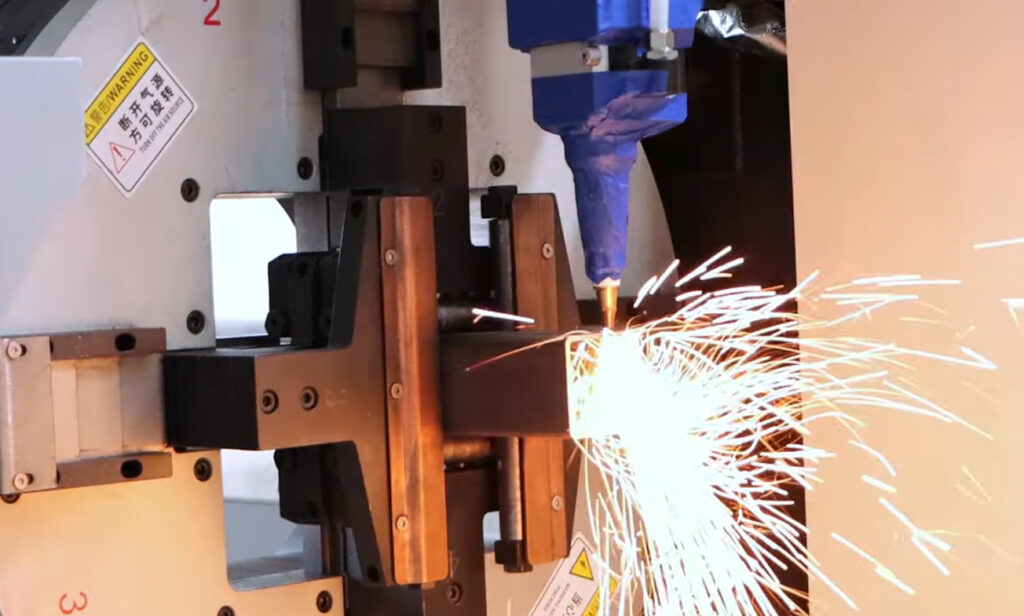
What recent evidence says when the sales brochure is off the table
Here’s where it gets interesting.
A 2024 case study in International Journal of Precision Engineering and Manufacturing-Green Technology found that the processing state accounted for 55% of overall energy performance for single sheets and 71% when batch processing was used. Most people read that and think, “energy efficiency.” I read it and think, “workflow discipline.” Because that’s what it is. Sequencing, batching, machine state control—those things shape output quality more than vendors like to admit. See the study, Industrial Energy Optimisation: A Laser Cutting Case Study.
And then there’s aerospace, where excuses get expensive fast. In March 2024, Reuters reported that the FAA found “non-compliance issues” in Boeing’s manufacturing process control, parts handling and storage, and product control during its 737 MAX audit. No, that article wasn’t about laser cutting. That’s exactly why it matters. The lesson is bigger than any one machine: when process control gets loose, “precision manufacturing” turns into a slogan. Reuters’ report on the FAA audit should be required reading for anyone who thinks capital equipment can compensate for bad discipline.
That’s the part I wish more buyers understood. They think they’re buying labor savings. Sometimes they are. But often the bigger win is uncertainty reduction. The part that cuts within window at 9:05 a.m., 1:20 p.m., and 11:40 p.m. is worth far more than the part that only looks good when the senior operator is hovering over the console.
How laser cutting machines improve accuracy on the shop floor
Start with setup.
Not speed. Not brochure wattage. Setup.
If you want laser cutting machines to improve accuracy, the boring stuff has to get handled first: beam alignment, nozzle centering, focus calibration, gas purity, sheet flatness, feed logic, trial coupons, destructive checks, and actual parameter validation on your own metal mix—not some polished demo sample that came out of a vendor’s lab under perfect conditions.
From my experience, this is where a lot of “precision cutting solutions” quietly fall apart. The machine is fine. The cut strategy is not.
Take materials. Carbon steel with oxygen can boost throughput, but oxidation can bite you later. Stainless steel and aluminum often benefit from nitrogen if edge cosmetics matter, though the gas bill climbs and nobody likes talking about that in early sales meetings. Reflective metals—brass, copper, silver—can punish sloppy optics protection and weak tuning. Shops looking at small fiber laser cutting machines for brass, gold, and silver should be realistic about that. Reflective alloys don’t care about optimism.
Machine format matters too, obviously. A compact 5050 small fiber laser cutting machine can make perfect sense for small-format parts, sample work, and tighter shops. A production beast in the 6000W to 40kW fiber laser metal cutting range is built for a very different game—thicker sections, bigger throughput, harder duty cycles. But power is not precision. Never confuse those.
A badly tuned 12 kW line can spit out uglier parts than a disciplined 3 kW cell. I’ve seen versions of that story more than once.
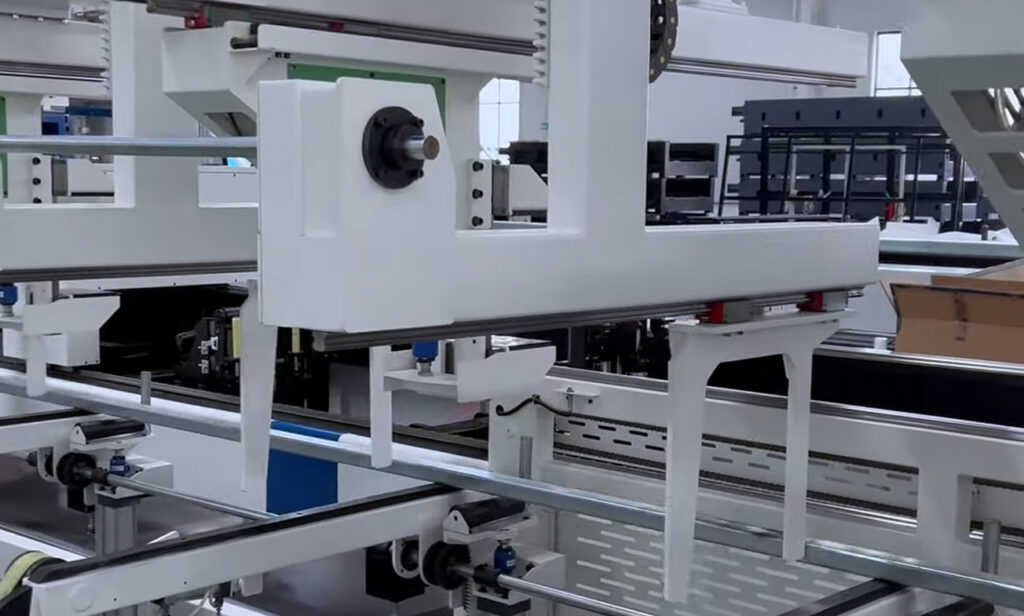
The process variables that usually decide whether precision holds
I keep coming back to the same checklist.
| Variable | Why it matters for precision cutting solutions |
|---|---|
| Beam quality | Directly affects kerf shape, focus consistency, and edge definition |
| Posizione di fuoco | Changes cut width, penetration, and dross behavior |
| Assist gas purity and pressure | Affects oxidation, edge finish, and slag removal |
| Material thickness variation | Creates inconsistency even with stable programs |
| Nozzle condition | Damaged nozzles distort gas flow and degrade cut quality |
| Motion control accuracy | Influences contour fidelity and small-feature repeatability |
| Nesting strategy | Impacts heat concentration, scrap, and part deformation |
| Maintenance discipline | Dirty optics and unstable chillers quietly kill repeatability |
Simple list. Messy reality.
Because none of these variables stay in their own lane. You tweak speed to reduce dross on 2 mm mild steel, then hole quality gets weird because focus height was the real problem. You blame the gas, but the nozzle face is nicked. You blame the machine, but the sheet batch is wandering on thickness. This is why “best laser cutting machines for precision manufacturing” is a half-bad question. The better question is: can your whole process hold window under production stress?
The industries where the gains are hardest to deny
Look at the parts.
Not the brochure photos. The parts.
The strongest case for laser cutting machines usually shows up in industries where geometry, repeatability, aesthetics, or downstream fit matter enough that every extra touch becomes expensive. Electronics enclosures. Appliance panels. EV hardware. Medical brackets. HVAC components. Elevator interiors. Metal furniture. Kitchen equipment. High-mix fab cells. Decorative stainless. Jewelry-adjacent metal work. The list gets long fast.
And thin-gauge sheet metal is where the advantage often gets brutally obvious. With sheet metal laser cutting materials, the laser can handle intricate contours and rapid job changes without dedicated tooling, which makes life easier for engineers and a lot less predictable—in a good way—for competitors stuck with slower changeovers. In medium-volume work, that flexibility can beat raw speed. In higher-volume production, stable automation and lower variation over long runs start to matter even more.
So yes, the benefits of laser cutting machines in manufacturing are real. But they show up hardest where variation is expensive and ugly parts cost more than people first admit.
One more thing. Safety is not separate from precision. I know some shops treat it like a compliance side quest, but that’s nonsense. A dirty cutting cell with poor guarding, weak fume handling, and casual operator habits is not a precision environment. Full stop. If a shop is serious about building a stable cell, basics like a laser protective fence should be part of the conversation from the start—not bolted on later because someone got nervous.
Domande frequenti
How do laser cutting machines improve precision manufacturing?
Laser cutting machines improve precision manufacturing by using a tightly controlled, non-contact beam to produce repeatable cuts with narrow kerf width, low mechanical distortion, and strong dimensional consistency across repeated jobs, which helps reduce tolerance variation, post-processing, and downstream assembly errors when the process is correctly tuned.
That’s the short answer. The longer one is harsher: they improve precision when the shop controls the whole cut stack—beam, gas, motion, material, inspection—and stop pretending the machine can fix sloppy process habits by itself.
Are laser cutting machines always more accurate than mechanical cutting?
Laser cutting machines are not automatically more accurate than every mechanical cutting method, because real precision depends on beam quality, focus, motion control, gas stability, material condition, maintenance, and inspection discipline, but they often deliver higher repeatability and geometric flexibility on complex profiles and thin-sheet metal work.
That’s where people get tripped up. A good mechanical setup can still outperform a poorly run laser process on the wrong job. The laser wins when the process is locked, the geometry suits non-contact cutting, and the shop knows what it’s doing.
Your next move if precision really matters
If you’re serious about precision manufacturing, don’t start with “What’s your fastest machine?” Start with “What happens to edge condition, hole quality, kerf stability, gas cost, and tolerance repeatability when this system runs my parts, on my materials, under real production pressure?” That question separates adults from tourists.
Map your part families first. Thin stainless. Mild steel. Aluminum. Reflective alloys. Tube jobs. Bevel work. Cosmetic parts. Structural parts. Then line those needs up against actual equipment options, whether that’s mainstream macchine per il taglio laser in fibra, more targeted laser cutting machine applications, or hybrid sheet-and-tube fiber laser systems.
And here’s my bias: if a vendor can talk all day about power and speed but gets foggy when you ask about taper, assist gas logic, nozzle wear, scrap rates, or inspection routines, I’d be very careful. That usually tells you everything you need to know.
That’s my view. A little blunt, maybe. But in this business, I trust process honesty more than shiny demos every time.


Click a caldo
Contatto
Applicazione
©Copyright [bogonglaser.com]. BOGONG Laser Machine Supplier All Rights Reserved.