-
Shunhua Road, Jinan City, Shandong

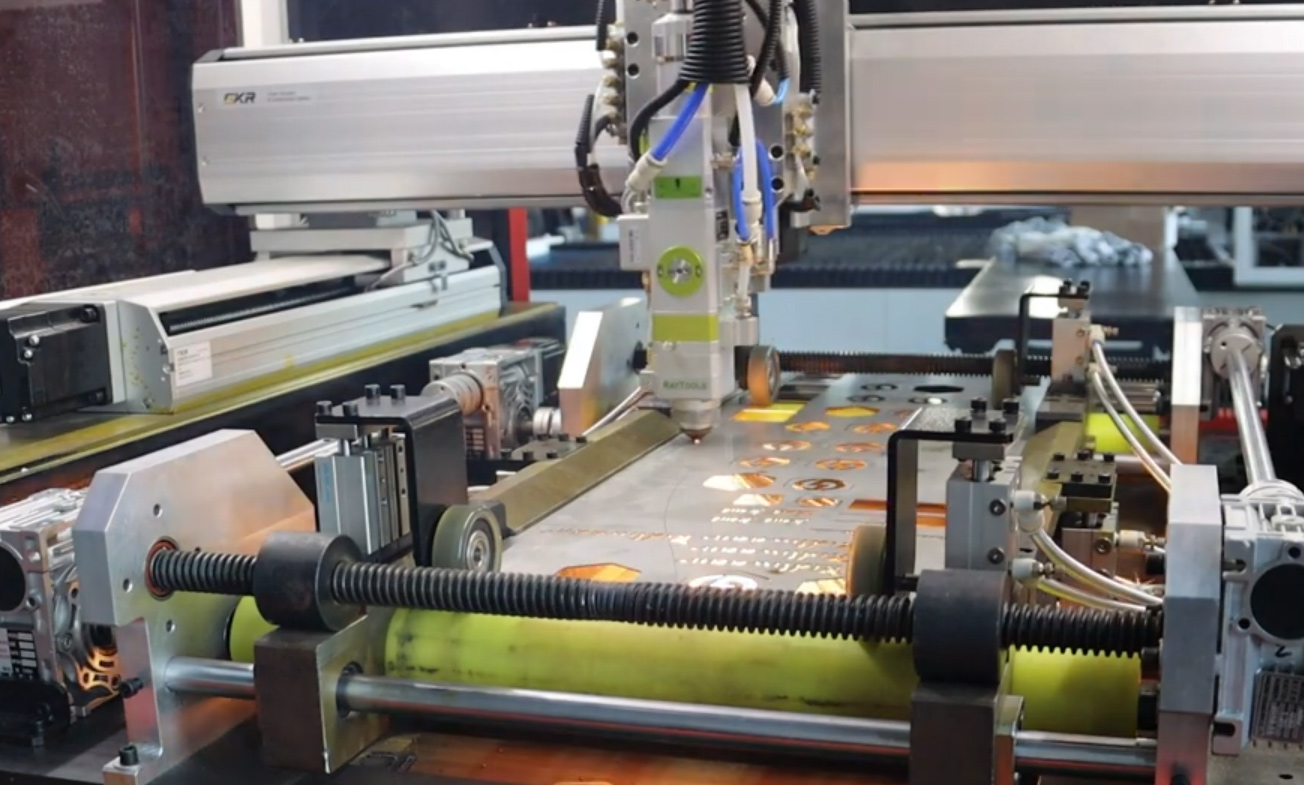
Automated Laser Cutting in High-Volume Manufacturing
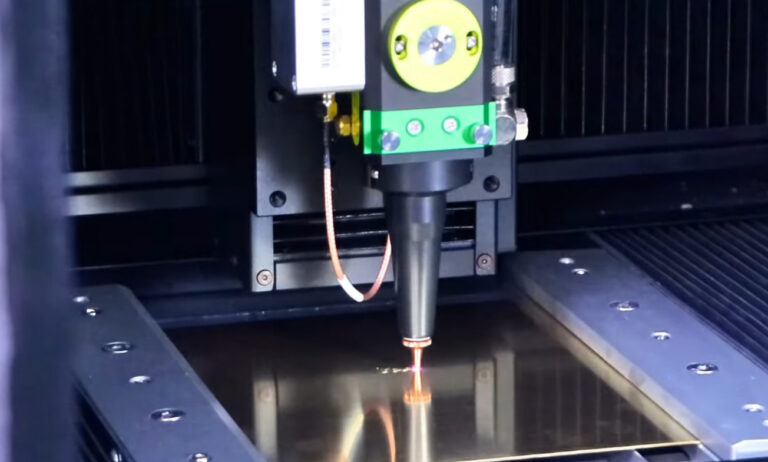
Automated laser cutting sells speed. In real factories, speed is the easy part. The hard part is keeping sheets moving, operators trained, parts sorted, and downstream welding or cleaning from turning into the real bottleneck.

The part nobody says out loud
Speed sells itself.
But I’ve sat in enough workshops, stood next to enough cutting cells, and listened to enough production managers swear that the new fiber laser would “fix throughput” to know how this movie usually ends: the beam is fast, the brochure looks clean, the sales demo is smooth, and then the whole line starts tripping over scrap skeletons, bad nests, mixed parts, late material calls, and weld stations that can’t keep up. Same story.
And that’s the pitch, right?
I frankly believe the market’s obsession with laser cutting automation is half justified and half theater. Yes, the pressure is real. Deloitte noted that U.S. manufacturing employment was close to 13 million in January 2024, manufacturing establishments had grown more than 11% from Q1 2019 to Q2 2023, and manufacturing construction spending reached a record $225 billion in January 2024 after nearly tripling since June 2020. That kind of expansion doesn’t happen because factories are relaxed and fully staffed. It happens because everybody is scrambling. See Deloitte’s 2024 manufacturing analysis.
So buyers punch in terms like automated laser cutting, high-volume laser cutting, oder best laser cutting automation for high-volume production because they want the same thing every plant wants: more output, fewer hands on the sheet, less chaos on second shift, and fewer headaches when one good operator calls in sick. Fair enough. But here’s the ugly truth: the machine is rarely the real bottleneck. The handoffs are.
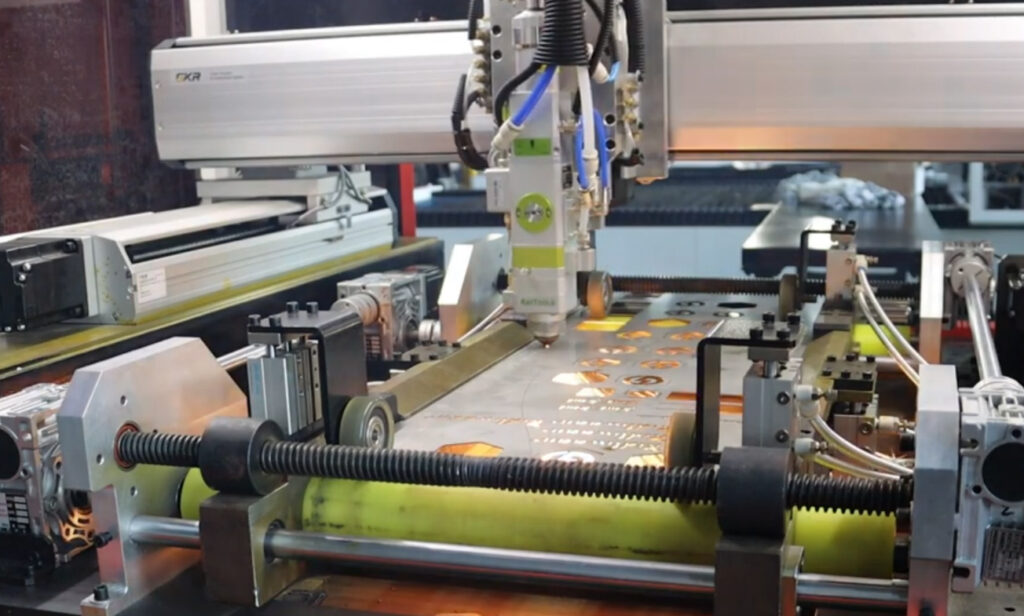
What laser cutting automation actually means on a factory floor
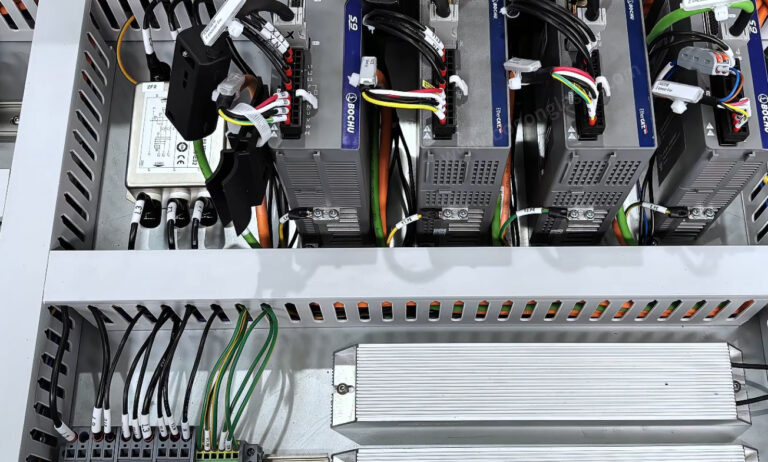
People talk about industrial laser cutting automation like it’s one neat upgrade, almost like adding a software plugin. It’s not. It’s a stack. A loading system. A pallet changer. Maybe a tower. Maybe a robot. Maybe part sorting. Maybe digital scheduling. Maybe none of it actually talks to the ERP the way the integrator promised (and yes, that happens more than salespeople admit).
The clean version buyers imagine
You load raw sheet. The system cuts. The parts move themselves.
The version factories live with
But then reality walks in wearing steel toes.
A warped sheet shows up from the supplier. Nitrogen use climbs for no obvious reason. Somebody nested the job for 3.0 mm and the actual material on the floor is closer to 2.8 mm. Tabs hold too hard. Small parts tip. Skeleton pull becomes a wrestling match. The unload robot grabs the wrong orientation. Then downstream welding sits there waiting for a batch that was supposedly “already done.”
That’s why I don’t look at fiber laser cutting automation as a pure machine purchase. I look at it like a flow-control problem with expensive hardware attached to it.
And this isn’t just shop-floor grumbling. Rockwell Automation’s latest smart manufacturing figures show that 56% of manufacturers are piloting smart manufacturing, 20% are already using it at scale, and 95% have either invested or plan to invest in AI/ML, generative AI, or causal AI within five years. Read Rockwell’s State of Smart Manufacturing. That tells me something simple: factories aren’t just buying faster gear anymore. They’re trying to stitch together labor, software, uptime, scheduling, and decision-making into one workable system. That’s a different animal.
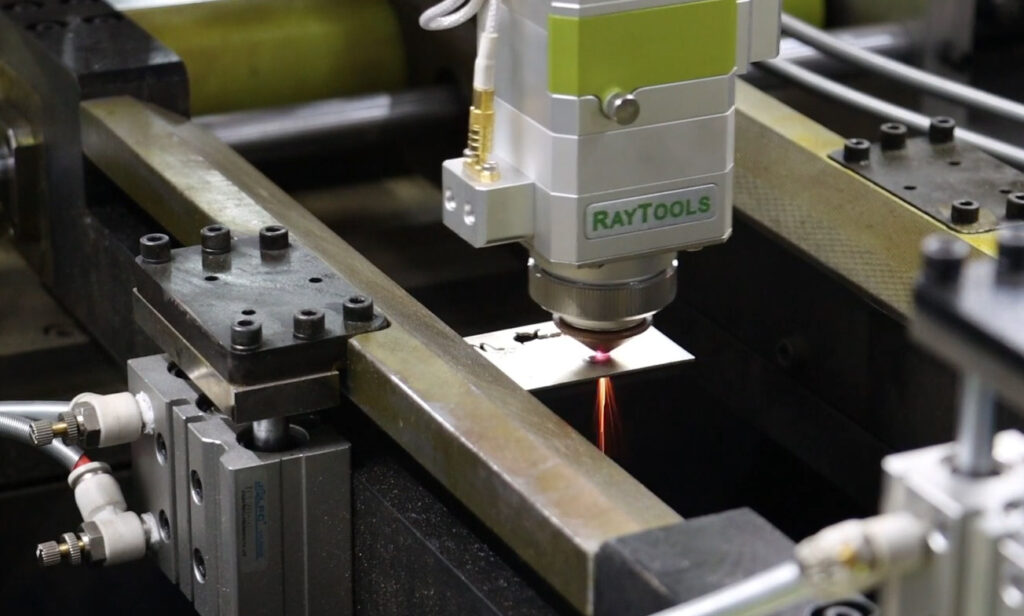
Where the ROI is real, and where people lie to themselves
This is where it gets uncomfortable.
Because buyers love beam-on speed. They love kilowatts. They love those sexy max-speed charts. They’ll argue for an hour over resonator specs and then spend maybe two minutes thinking about unload labor, remnant handling, or what happens when parts hit the next process in the wrong sequence. That’s backwards.
From my experience, most gains in laser cutting in manufacturing don’t come from chasing a few more seconds out of the cut cycle. They come from cutting labor touches. Fewer sheet swaps. Less forklift wandering. Fewer mixed batches. Less re-tagging. Less operator babysitting. Less “Where did that part go?” nonsense.
A real example? FANUC’s WKW North America case study. WKW, a Tier 1 automotive supplier, adopted a fully automated robotic laser cutting system and reported a 50% reduction in total manufacturing costs, fewer operators needed for load/unload and transport, accuracy down to ±50 µm, and cycle times as low as 26 seconds per part, with output above 1,000 parts in an 8-hour shift. That’s not marketing fluff. That’s what automation looks like when the part family is repeatable and the cell design isn’t half-baked.
Still—here’s my bias—I think too many mid-sized fabricators copy that logic without copying the discipline behind it.
They don’t lose margin because the laser head is “too slow.” They lose margin because their shop still runs on tribal knowledge, loose scheduling, random staging, and unload routines that depend on one veteran operator who knows which nest can be shaken loose and which one will turn into a pile of scrap confetti. That’s shop truth.
What usually drives gains fastest
| Automation layer | What it fixes | What buyers often miss |
|---|---|---|
| Auto loading/pallet change | Idle machine time | Material quality variation still kills consistency |
| Tower storage | Better sheet availability | Bad ERP data makes “organized” storage useless |
| Part sorting/unloading | Less labor, fewer mix-ups | Small parts and hot parts still need disciplined handling |
| Nesting + MES integration | Better sheet yield and scheduling | Garbage job data creates faster garbage |
| Robotic transfer to welding/cleaning | Better flow between cells | Downstream takt time must match cutting output |
That table looks basic. I know. But factories ignore basic things every single day, and then they blame the machine.
High-volume manufacturing does not forgive weak handoffs
Bottlenecks move.
That’s the part buyers hate because it means the cutting cell can be doing exactly what it was sold to do while the factory still misses margin. A fast laser with weak downstream flow is just a very efficient way to create WIP.
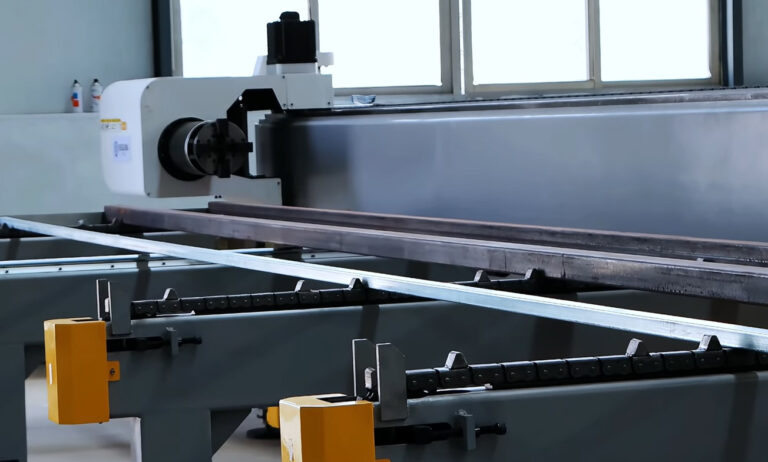
And this is why I keep coming back to handoff discipline. TRUMPF said in March 2024 that laser tube cutting still requires significant operator involvement, especially when parts are large and awkward, and introduced an automated unloading system for its 5000 and 7000-series TruLaser Tube machines aimed at medium- and high-volume production. Read the TRUMPF Tube 2024 announcement.
What caught my eye wasn’t just the conveyor. It was the digital handoff. Because that’s the real fight, isn’t it? Not just cutting the part, but getting the right part, in the right orientation, at the right time, into the next step without human cleanup work chewing up the savings.
So yes, when people ask me about automated manufacturing laser systems, I drag the conversation into adjacent processes whether they like it or not. If the next stage in your line involves joining, repair, or post-cut touch-up, then equipment like portable handheld laser welding systems, mini laser welding machines with CCD positioning, oder pulse laser cleaning equipment for pre-weld and post-process surface treatment suddenly becomes part of the same throughput conversation. And when operators need mobility between cells—real plants, real constraints—I’d also look at trolley-case laser cleaning machines.
Why? Because no customer pays extra just because you cut blanks faster. They pay for finished parts, finished assemblies, finished shipments. Big difference.
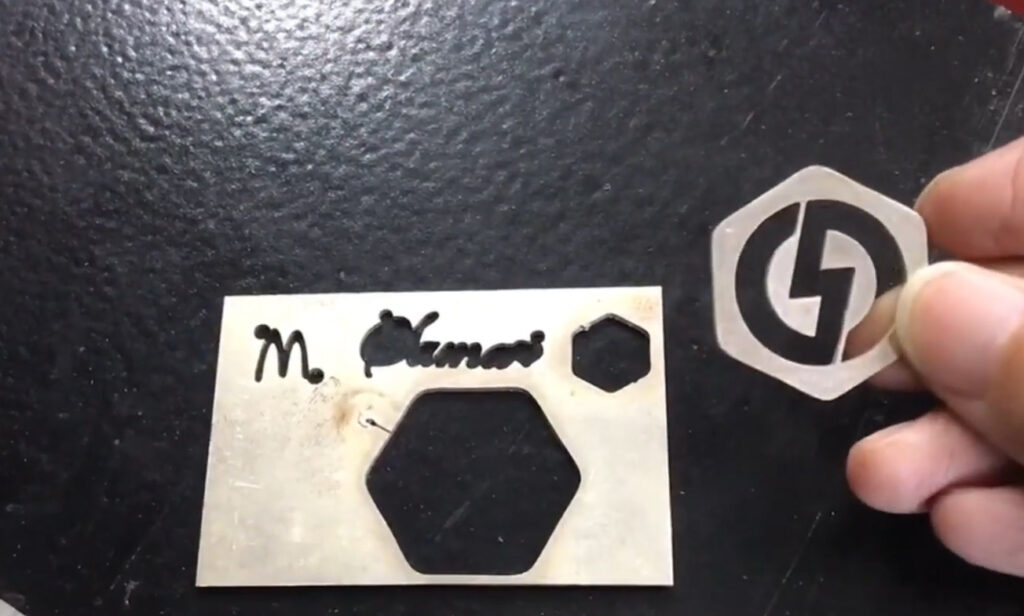
The safety and compliance issue buyers underrate
This part gets ignored.
Usually until something goes wrong.
But automated cutting cells aren’t just production tools. They’re safety systems wrapped around production tools. OSHA states that laser hazards are covered under specific standards for general industry, and its technical manual says Class IV lasers are hazardous under direct and diffuse viewing conditions, can present fire and skin hazards, and require significant controls. Review OSHA’s laser standards page and the OSHA technical manual on laser hazards.
And honestly, I don’t think enough buyers price this in correctly.
They budget for the source, the chiller, the automation module, maybe the tower, maybe the install. Then they act surprised when guarding, interlocks, fume extraction, layout spacing, SOP drafting, training, and lockout discipline show up as real cost centers. But that’s not “extra.” That’s part of the system. Always was.
Here’s the ugly truth: manual shops fail loudly. Automated shops can fail quietly—and at scale.
What I would ask before buying the “best laser cutting automation for high-volume production”
Not the showroom questions.
The real ones.
Ask these first
How many touches per part exist now, from raw sheet to finished assembly?
What percentage of current labor is spent cutting versus moving, sorting, labeling, waiting, and reworking?
Can your ERP, MES, or nesting software send clean job data every single shift?
What happens to scrap skeletons, mixed nests, hot parts, and urgent changeovers?
Is nitrogen cost modeled at your actual duty cycle, or at sales-demo fantasy levels?
Can downstream welding, cleaning, and inspection absorb the new output without adding chaos?
If those answers are vague, your project isn’t ready. Not because automation is a bad move. Because your baseline is foggy, and fuzzy baselines make expensive mistakes.
FAQs
Is automated laser cutting always the cheapest option?
Automated laser cutting is not always the cheapest option because capital cost, software integration, gas consumption, maintenance, safety controls, and downstream bottlenecks can outweigh labor savings when batch sizes are unstable or part routing is poorly designed.
No, not automatically. I’ve seen cells that looked fantastic in a proposal and then struggled to earn back the investment because the production mix changed too often, the unload logic was weak, or downstream operations couldn’t absorb the volume.
How do you automate laser cutting in manufacturing without creating new bottlenecks?
Automating laser cutting in manufacturing without creating new bottlenecks requires balancing cut speed with material staging, unload sorting, welding, cleaning, inspection, and data flow so that every downstream process can absorb the same takt rate the laser cell creates.
That’s the whole trick. Not just faster cutting—balanced flow. If your cut cell doubles output but your weld prep, deburr, or inspection still runs like a manual patchwork, you didn’t solve the problem. You relocated it.
Are fiber laser cutting automation systems better than CO2-based setups for volume work?
Fiber laser cutting automation systems are often better for volume metal fabrication because they usually support faster processing on many thin-to-mid-gauge metals, stronger integration with modern controls, and lower operating friction in shops that need repeatability, uptime, and easier automation around the cutting cell.
Usually, yes. But “better” depends on the material mix, thickness range, edge quality expectations, assist-gas cost, and how repetitive the production schedule really is. Context matters more than fanboy arguments.
Your next move
Don’t buy the dream first.
Map the flow first—raw sheet receipt, staging, nesting, loading, beam-on time, unload, sort, weld, clean, inspect, pack. Then look for the money leak. Not the pretty leak. The real one.
Because if your biggest loss comes from labor touches, unstable flow, and too much dependence on manual handling, then laser cutting automation might be exactly the right move. But if your bigger problem is ugly job data, poor scheduling, bad batch control, or downstream choke points, then a faster cutting cell won’t save you. It’ll just make the shop look busy while margin keeps bleeding.
That sounds blunt. Good.
And if you’re building out a broader metal-processing workflow, I’d review the supporting processes right now—not later—including handheld laser welding equipment, CCD-guided mini welding systemsund industrial laser cleaning options. In high-volume work, the winner usually isn’t the shop with the flashiest machine. It’s the shop where the handoffs are boring, the takt is real, and nobody has to “save the line” with heroics at 7:40 p.m.


Heißer Klick
Kontakt
Anmeldung
©Copyright [bogonglaser.com]. BOGONG Laser Machine Supplier All Rights Reserved.