-
Shunhua Road, cidade de Jinan, Shandong

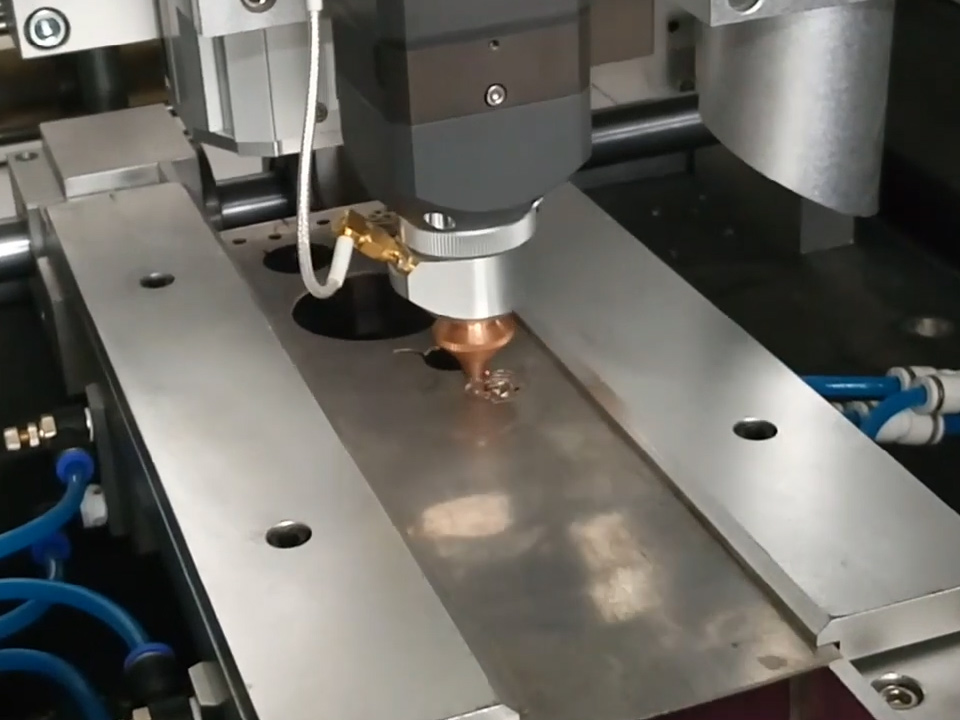
Future Trends in Laser Cutting Technology for Industry
The future of laser cutting will not be decided by headline wattage alone. It will be decided by software, batching discipline, inspection data, energy intensity, export controls, and whether a factory treats its laser as a machine or as part of a manufacturing system.

We’ve seen this movie before.
A new machine hits the market, somebody slaps a bigger kilowatt number on the brochure, the sales guys start talking like physics itself has been replaced, and for six months half the industry acts as if buying fresh hardware automatically fixes bad nesting, weak gas discipline, clumsy job routing, and operators who are still babysitting the cut edge by ear. It doesn’t. Usually.
And that’s where I stand on laser cutting technology right now: the future is real, yes, but it’s less glamorous than people want to hear. It’s not just about the beam source anymore. It’s about control. Data. Uptime. Job mix. Traceability. Power draw. Serviceability. The boring stuff that actually decides margin.
So what’s changing? More than people admit.
The wattage obsession is wearing thin
I’ll say the quiet part out loud.
For too long, industrial laser cutting buying decisions have been driven by raw spec-sheet vanity—higher wattage, faster top-line speed, bigger claims on stainless, lots of chest beating about “productivity”—while the stuff that destroys real profitability, like poor nesting efficiency, sloppy pierce strategy, nozzle wear, unstable assist gas flow, and lousy shift-to-shift consistency, gets pushed off as some minor operational detail. Big mistake.
But the market is moving anyway. Whether shops are ready or not. According to the World Robotics 2024 report from the International Federation of Robotics, factories worldwide were running 4,281,585 industrial robots in 2023, up 10%, and annual robot installations stayed above half a million for the third straight year. That same IFR update also put global robot density at 162 units per 10,000 employees in 2023. Not small numbers. Not hype either.
And here’s the ugly truth: those numbers matter because laser cutting trends no longer sit in their own little box. Cutting is now part of a cell, a line, a digital loop. If a shop still buys lasers like it’s 2017—machine first, process later—it’s already behind.
From my experience, some factories don’t need a monster platform at all. They need a stable, clean, compact workhorse that can hold tolerances, behave predictably, and stop eating floor space for no good reason. That’s exactly why a fiber laser cutting system for small-format production can be a smarter fit than overbuying a machine that looks good in a showroom and underperforms on a real order board.
Fiber lasers are turning into factory infrastructure
This part matters more.
People still talk about corte a laser de fibra as though the source is the whole story. It’s not. The source is just one layer. The actual value now comes from how the machine behaves inside the shop’s wider operating stack—CAM, nesting logic, maintenance signals, operator workflow, traceability, downstream inspection, rework flags, even ERP sync if the company is organized enough to care.
That’s the direction the institutions are pointing too. NIST’s 2024 advisory material on Manufacturing USA highlighted a new digital twins institute backed by $285 million and another institute focused on AI for manufacturing resilience with up to $70 million in federal funding over five years. NIST has also been pretty clear that smart manufacturing only works when manufacturing data can move more reliably across systems and supply chains. That’s a polite way of saying most factories still have messy digital plumbing.
And that mess shows up fast on the floor. One bad nest. One parameter pack that wasn’t updated. One operator compensating by instinct. One maintenance log nobody reads. Then suddenly the “high-speed” line has edge dross, inconsistent kerf, blown cycle targets, and a supervisor blaming the material batch because it’s easier than admitting the workflow is broken.
I frankly believe the next phase of smart manufacturing laser cutting won’t be won by the flashiest hardware. It’ll be won by the shops that make the machine talk to the rest of production without turning every job into a tribal-knowledge exercise.
That’s also why a broader laser products portfolio for industrial workflows matters. One machine page tells you a feature set. A full workflow view tells you whether the supplier even understands how real production behaves.

AI in laser cutting won’t look sexy at first
Because the useful version of AI in laser cutting is not some sci-fi dashboard with floating graphics and a salesman saying “self-optimizing.” The useful version is gritty. It’s parameter correction. Drift detection. Pattern recognition in rejected parts. Smarter maintenance prompts. Faster estimation of cut-time and contour load. Better nesting decisions tied to energy use and throughput. Real factory stuff.
And the recent data backs that up. A 2024 Elsevier paper on a fully automated solid-state laser-cutting machine found that operational duration had a stronger effect on resource consumption than machine and laser configuration settings, while part contour length emerged as a meaningful KPI for sustainability planning. That line stuck with me. Because it says something many people in this business don’t want to hear: planning discipline still beats hardware swagger.
Then you look at adoption reality. A 2024 Reuters report on manufacturing AI adoption found that only 58% of manufacturing leaders planned to increase AI spending in 2024, down from 93% the year before, with 44% citing accuracy concerns and only 20% of planned AI projects actually implemented. Which, frankly, sounds about right.
It works. Sometimes.
That drop tells me the market is growing up. The fantasy phase is fading. People have started asking the rude but necessary question: “Does this software actually reduce scrap, setup time, or downtime—or is it just a prettier way to watch the same old mess happen?”
And the factories that get it won’t isolate cutting from adjacent processes either. They’ll connect it. If welding sits downstream, then cut quality, fit-up consistency, marking logic, and operator handling all feed into one another whether management likes it or not. That’s why a floor-type laser welding machine for industrial lines isn’t some separate discussion. In a serious shop, it’s part of the same process chain.
Sustainable laser cutting is where the fluff dies
This one gets abused a lot.
Every vendor loves saying “less waste” as if that alone proves sustainable laser cutting. But that’s a lazy answer. Material yield matters, sure. Yet the bigger story sits in machine-state behavior, idle time, gas consumption, batch logic, rework frequency, and how often a line burns electricity without making good parts.
That’s where the real pain lives.
A 2024 Springer case study on a UK laser shim-cutting cell found that the processing state accounted for 55% of overall energy performance for single sheets and 71% under batch processing. Another 2024 paper on explainable machine learning for laser-cutting machine tools argued that production planning and machine speed optimization can improve environmental performance, and that contour length should be treated as a design-stage sustainability KPI. That is much more useful than the usual recycled “precision means greener production” line.
Here’s the ugly truth again: a badly run laser line can hide huge waste behind a good-looking cut sample. Power leaks through non-productive states. Assist gas gets handled like it’s free. Jobs are loaded in inefficient sequences. Operators make manual save-after-save that never turns into process learning. Then management says they’re investing in sustainability because someone turned off the lights in the office. Come on.
And once the part leaves the cut bed, identity matters. Warranty defense matters. Audit trails matter. Which is why UV laser marking for traceability and fine part identification stops being a “nice add-on” and starts becoming part of the core production logic—especially in higher-spec sectors where part history isn’t optional.

The trends that deserve attention — and the ones that don’t
I’m not impressed by every “next big thing” that gets thrown around in this business. Some trends are real. Some are brochure filler. So let’s separate the two.
| Trend | What is happening now | Why it matters | Hidden risk |
|---|---|---|---|
| Fiber laser consolidation | More shops standardize around fiber platforms for speed, maintenance, and metal-processing range | Better fit for repeat industrial workflows and easier automation | Buyers still overpay for power they cannot use efficiently |
| AI-assisted process control | AI is being applied to anomaly detection, resource modeling, and production planning more than flashy front-end tools | Helps reduce scrap, idle time, and unstable parameter choices | Poor data quality makes the model look smarter than it is |
| Laser cutting automation | Robot density and installations continue rising globally, which pushes cutting cells into larger automated lines | Better throughput, better repeatability, lower labor dependence | Integration cost and weak process discipline can erase gains |
| Energy-focused operations | Laser energy use is being measured at machine-state level, not just machine level | Real savings come from batching, scheduling, and runtime logic | Shops blame hardware for what is really a workflow problem |
| Traceability by default | More manufacturers link cutting, marking, welding, and quality data | Stronger compliance, warranty defense, and root-cause analysis | Legacy software stacks often cannot talk to each other |
| Policy and export control pressure | Laser equipment is now clearly within national-security scrutiny in some markets | Affects sourcing, sales, service access, and market entry | Many firms still treat policy risk as someone else’s problem |
That last one? Most underrated of the bunch.
The policy angle is no longer background noise
People in manufacturing hate talking about this until they’re forced to.
But laser systems do not exist in some clean, apolitical vacuum. They move across borders. They sit inside supply chains. They can trigger compliance issues, export restrictions, sanctions headaches, service limitations, and customer-screening problems faster than many sales teams would ever admit in public.
Reuters reported in September 2024 that U.S. authorities arrested a former laser-tech salesman over allegations that laser welding machines were illegally exported to a division of Russia’s state nuclear company using falsified documents. That case matters because it drags laser equipment into a harder light: not just as factory gear, but as regulated technology with geopolitical baggage.
And if that sounds dramatic, well—it is.
I think a lot of mid-market buyers still underestimate this risk. They ask about speed, thickness, training, maybe warranty. Fine. But they don’t ask hard enough about service continuity, software dependencies, controlled end-use, regional restrictions, or the long-term availability of spares if policy conditions change. That’s not strategic purchasing. That’s wishful thinking with a PO attached.
What the serious shops will do next
Not everyone will adapt. That’s the truth.
The shops that come out ahead in the next cycle will treat laser cutting automation as one operating layer inside a connected manufacturing loop: cut, mark, inspect, maybe weld, then feed what they learn back into the next batch, next setup, next process window. They won’t chase top-end speed unless the order mix actually supports it. They’ll watch OEE, contour complexity, nozzle life, gas stability, idle energy, and defect recurrence like adults.
And they’ll stay practical.
Sometimes that means using a compact cutter instead of a giant one. Sometimes it means solving traceability before buying more power. Sometimes it means adding a flexible tool on the edge of the workflow—something like a portable laser engraver for agile shop-floor work—because not every bottleneck deserves a capital-intensive answer.
From my experience, the factories that win don’t always look the most impressive on day one. They look disciplined. They look boring. Their data is cleaner. Their operators aren’t improvising every shift. Their scrap meetings are shorter. Their planning has fewer fairy tales in it.
That’s the future. Not noise. Control.
Perguntas frequentes
What is the future of laser cutting in manufacturing?
The future of laser cutting in manufacturing is the shift from stand-alone beam machines to connected, data-rich production systems that combine fiber laser cutting, automation, AI-assisted process control, energy tracking, and traceability to improve throughput, consistency, and decision-making across the entire shop floor.
But that’s only the clean definition. In real factories, it means fewer isolated machines and more integrated cells where cutting decisions affect welding, marking, inspection, and scheduling almost immediately.
How is AI used in laser cutting?
AI in laser cutting is the application of machine-learning models and data analysis to predict parameter outcomes, detect anomalies, estimate resource use, reduce scrap, improve production planning, and help operators respond faster to drift, defects, or unstable cutting conditions without relying only on manual judgment.
Most of the valuable stuff is quiet. It helps behind the scenes—settings, maintenance, quality flags, and batch logic—not in flashy demo videos.
What makes laser cutting sustainable?
Sustainable laser cutting is the disciplined reduction of energy use, non-productive machine states, scrap, gas waste, and avoidable rework through better batching, planning, parameter control, and measurable process data, rather than relying on vague claims about precision or lower waste alone.
I frankly believe this is where a lot of companies expose themselves. If they can’t measure process-state losses, they’re not managing sustainability. They’re narrating it.
Your Next Steps
Don’t start with the brochure.
Start with the mess. Where does scrap really come from? Which jobs choke the line? Which shifts drift off spec? Where do you lose gas, time, or operator confidence? Which parts need traceability that your current setup can’t provide? Those questions are a lot less exciting than machine shopping—but they’re the ones that save money.
Then, once the weak spots are obvious, build from the workflow outward. Review your industrial laser systems, then match the actual bottleneck to the actual tool: a compact máquina de corte a laser de fibra for tighter sheet processing, a Máquina de marcação a laser UV for traceability, and a floor-type laser welding machine where joining belongs inside the same digital loop.


Clique quente
Entre em contato conosco
Aplicativo
©Copyright [bogonglaser.com]. BOGONG Laser Machine Supplier All Rights Reserved.