-
Shunhua Road, město Jinan, Shandong

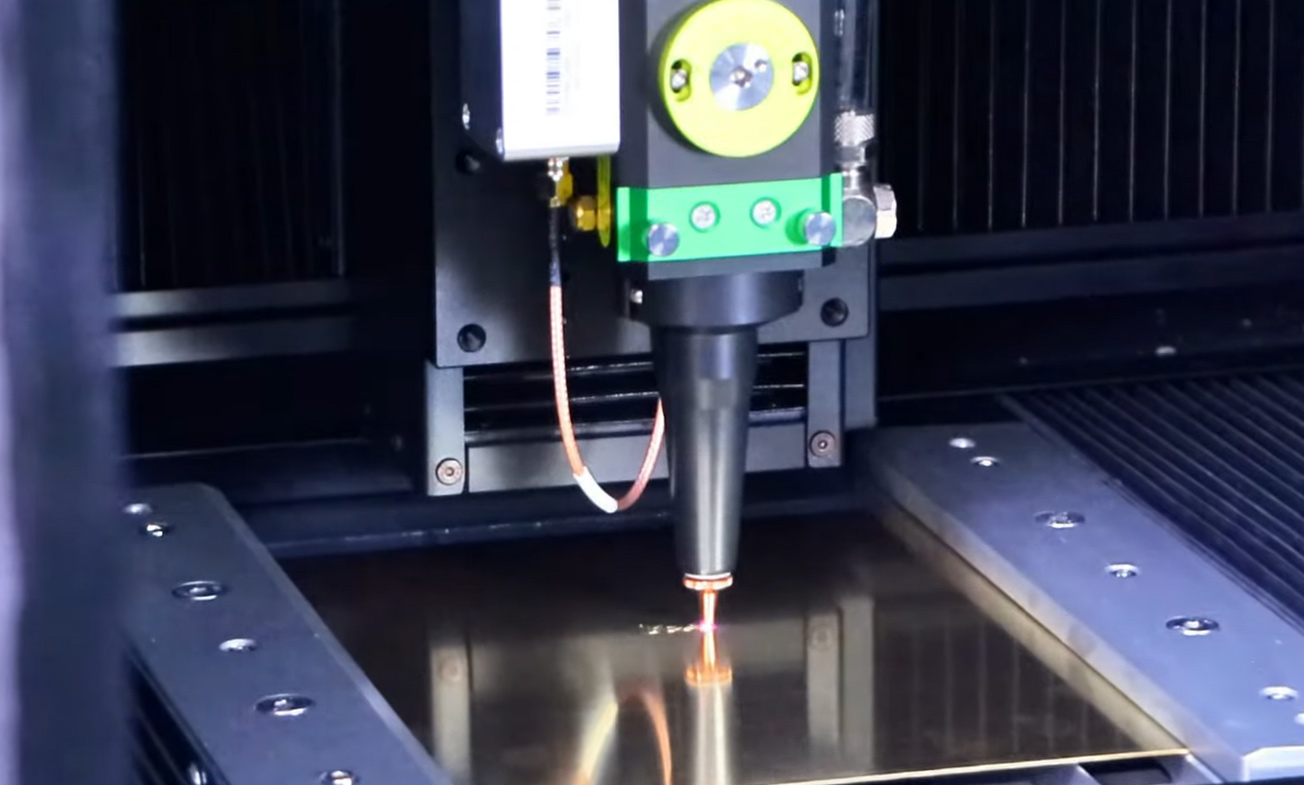
How OEM Manufacturers Use Laser Cutting to Reduce Production Costs
Most OEMs do not lose money on cutting speed alone. They lose it in scrap, changeovers, rework, queue time, and bloated routing logic. I’ve seen shops blame labor rates when the real leak sat inside bad nesting, slow quoting, and old process assumptions. Laser cutting fixes some of that fast. It also creates new mistakes when buyers chase wattage instead of throughput.

The part nobody says out loud
Margins disappear quietly.
I’ve sat in enough factory meetings to know how this usually goes: someone points at hourly labor, someone else complains about steel prices, the sales rep starts waving a speed chart, and meanwhile the real leak keeps dripping from bad nests, ugly handoffs, queue time, scrap skeletons, and rework nobody wants to own. That’s the real factory tax. Isn’t it?
But here’s the ugly truth: most OEMs don’t buy řezání laserem because they’re in love with shiny equipment. They buy it because the old workflow has gone stale. Too many touches. Too much babysitting. Too much “we’ll fix it downstream.”
And the timing makes sense. According to the 2024 Third Quarter Manufacturers’ Outlook Survey by NAM, 68.4% of manufacturers said a weaker domestic economy was their top challenge, and labor quality stayed near the top of the headache list. Then layer in the wage pressure. The U.S. Bureau of Labor Statistics profile for NAICS 332 fabricated metal products showed the sector dealing with higher labor costs and soft productivity. That combo hurts. Fast.
So, yes, laser cutting matters. But not for the brochure reason.
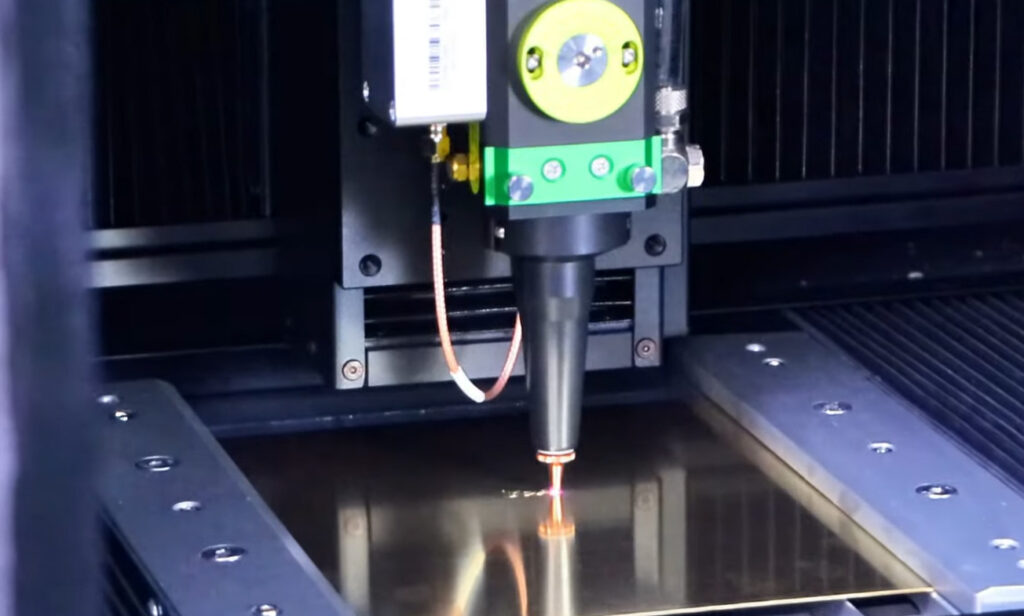
Where the money actually leaks on an OEM floor
Scrap is usually the first bloodletting
Bad nesting kills margins.
Everybody loves to talk about cut speed, but I frankly believe that’s where too many buyers get played, because a fast machine with sloppy nesting logic is still a very efficient way to turn expensive sheet into expensive waste, especially when part families are messy and remnant management is treated like an afterthought. That’s not optimization. That’s theater.
From my experience, scrap is where laser cutting manufacturing starts earning its keep. Not because the beam is magical. Because digital nesting gives you a real shot at squeezing more sellable geometry out of the same sheet.
And if your mix includes tiny brackets, sample parts, medical-like precision pieces, or short-run stainless work, a compact platform can make more sense than some oversized showpiece. That’s exactly where a smallest 3020 fiber laser cutting machine for fine-part prototyping becomes practical instead of ornamental.
Setup time is the silent killer
Three minutes here. Seven there.
Then the whole shift goes sideways.
Yet this is the bit outsiders miss: a lot of OEM plants aren’t losing money because the cut itself is slow. They’re losing it because every new batch turns into a mini ceremony—fixture swap, tooling check, program handoff, operator interpretation, first-piece drama, QC loop, restart. That drag adds up faster than most managers admit in public.
Laser cutting strips out a lot of that tooling clutter. Not all of it. Enough of it.
And when the market gets shaky, that flexibility matters more. U.S. manufacturing remained in contraction territory, with weak demand and higher interest rates making life harder for producers. In plain English: nobody wants bloated setup time when orders are uneven and inventory discipline gets tight.
That’s why I don’t treat OEM laser cutting as a simple machine upgrade. It’s a changeover weapon—if the team uses it that way.
Rework is where fake savings get exposed
Clean cuts matter.
But they matter later, not just at the cutting cell. A cleaner edge and tighter repeatability usually mean fewer fit-up fights in welding, less hand-grinding, less “close enough” nonsense at assembly, and fewer parts wandering around the shop waiting for somebody to rescue them. That’s where the real money starts showing up.
And yes, welding gets dragged into this whether people like it or not. Better cut parts tend to assemble with less cursing. So a best handheld laser welder for fast post-cut assembly work doesn’t sit outside the savings story. It sits right in the middle of it.
The cost stack most buyers get wrong
Buyers love wattage.
I get it. Wattage is easy to brag about in a meeting. It sounds technical. It looks decisive. But here’s the ugly truth: I’ve seen purchasing teams ask about max thickness before they ask about remnant recovery, assist-gas burn, idle draw, setup minutes, revision churn, or how long it actually takes to move from CAD release to first good part. That’s backwards—and expensive.
If you want industrial laser cutting to reduce production costs, this is the table that matters:
| Cost Driver | Old-School Fabrication Pain | What Laser Cutting Changes | What OEMs Should Measure |
|---|---|---|---|
| Material yield | High scrap from poor layout and tooling limits | Tighter nesting, cleaner geometry | Scrap rate %, remnant reuse %, yield by material |
| Setup/changeover | Tooling swaps and operator dependency | Faster digital switching between jobs | Average setup minutes per batch |
| Rework | Burrs, distortion, tolerance drift | More repeatable edges and dimensions | First-pass yield %, rework hours |
| Labor intensity | Heavy manual intervention | Fewer touchpoints for cutting stage | Direct labor hours per 100 parts |
| Lead time | Delays from tooling and queue buildup | Faster programming-to-production path | Quote-to-cut time, job turnaround |
| Secondary ops | Deburring, cleaning, fit-up correction | Often reduced, not eliminated | Finishing hours per part |
| Safety/compliance | Open hazards and inconsistent controls | Requires formal controls, enclosures, training | Incident rate, downtime, audit readiness |
That last line gets ignored way too often. It shouldn’t. OSHA’s technical guidance on laser hazards is pretty direct about Class 4 risks, including eye, skin, and fire hazards, and the training burden is not optional. So if someone pitches you “cost savings” while hand-waving containment, I’d be careful.
Which is why a laser protective fence for Class 4 industrial laser setups isn’t some side accessory. It’s part of the uptime equation.
Why laser cutting production costs don’t fall all at once
Savings show up in layers.
First scrap improves. Then setup shrinks. Then labor touch-time eases. Then schedule reliability gets less ugly. Then, if the team actually has its act together, downstream finishing and assembly calm down too. That sequence matters because too many people expect instant ROI from a speed demo on mild steel and a salesman’s spreadsheet. That’s not how real plants behave.
From my experience, laser cutting production costs drop when the beam starts compressing the whole routing chain—not just the cutting cycle. Less waiting. Less fiddling. Less side-process clutter. Better flow.
Marshall’s case backs that up in a pretty practical way. The fiber laser story from Marshall University didn’t just celebrate speed; it pointed to broader material capability, more intricate part handling, and regional production demand. That’s a systems win. Not a vanity win.
And if the parts come off the table with oxide, contamination, or coating-prep headaches, then the next leak shows up in surface prep. That’s where 200W pulse laser cleaning for oxide and surface prep fits naturally. Less abrasive mess. Less chemical cleanup. Fewer random prep variations before coating or weld.
It works. Usually.

Why the cheapest quote on metal laser cutting services is often the most expensive
Cheap parts lie.
I’ve seen this movie too many times: procurement squeezes a supplier on piece price, gets the “win,” then spends the next three months eating the loss through scratches, poor edge quality, blown lead times, revision confusion, or palletized scrap disguised as deliverable inventory. The RFQ looked great. The actual production outcome didn’t.
That’s why I don’t like treating metal laser cutting services as a pure commodity. Shops don’t nest the same. They don’t inspect the same. They don’t package the same. They definitely don’t react to ECO changes the same.
And here’s where the shop-floor slang matters: if your vendor has ugly kerf behavior, too much dross, a shaky cut library, or operators riding the limits because they’re trying to beat takt on the wrong material, that “cheap” part price goes toxic later. Assembly feels it. QC feels it. Your customer definitely feels it.
So, yes, price matters. But if that’s the only lever you’re pulling, you’re probably buying headaches in bulk.
The OEM playbook I actually trust
Buy workflow, not specs.
I know that sounds blunt. It is. But I’d rather say it clearly than pretend another machine brochure is going to save a messy production system.
Are you replacing tooling cost—or just stacking capex on top of old habits?
I’ve watched OEMs install fancy laser cells and still keep the same dusty process logic alive underneath them, which is a bit like buying a race car and towing it everywhere with a forklift because nobody wants to change the route. It happens more than vendors admit.
If engineering still designs around obsolete tooling constraints, the savings stall.
Are you redesigning the part family for the laser?
This one matters more than people think.
The MIT work on tube-laser utilization and redesign strategy points toward something smart: don’t just install the machine and pray for utilization. Redesign the product family around what the laser does well. That’s where throughput starts acting differently.
I frankly believe this is one of the biggest divides between shops that get real ROI and shops that just collect machine payments.
Are you measuring gas, idle load, and queue drag?
Nobody likes talking about nitrogen bills. Or idle draw. Or the machine sitting there waiting because programming, material staging, and dispatch aren’t synced. But that stuff is real money. And it quietly murders the cost-effective laser cutting story if you ignore it.
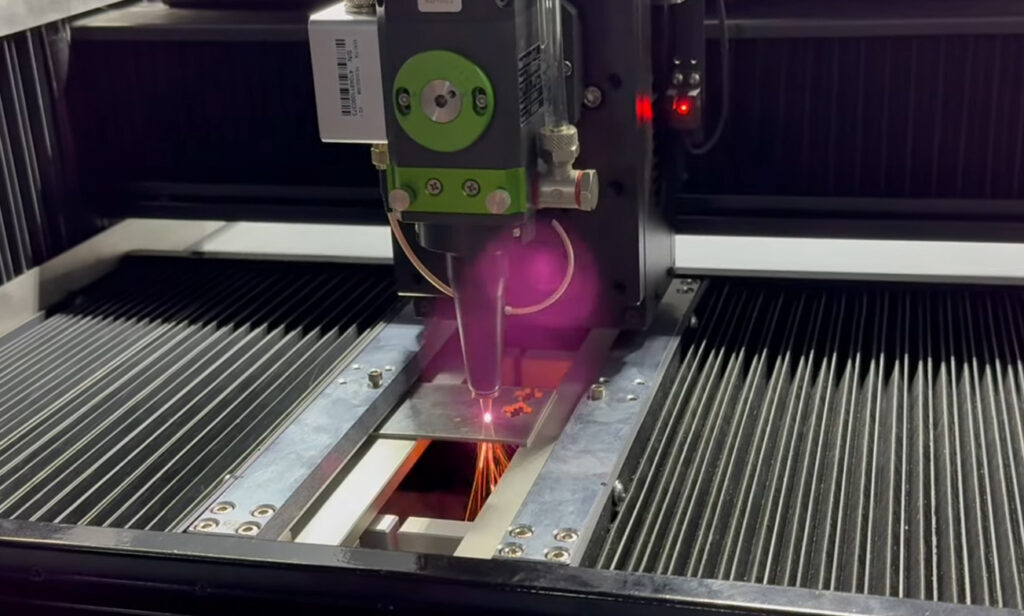
Are you connecting cut quality to welding and finishing?
Bad cuts don’t stay in their lane.
They show up later as forced fit-up, ugly seams, extra cleanup, coating inconsistency, and schedule slippage. If your team tracks cutting in one silo and rework in another, you’re missing the point.
Nejčastější dotazy
What is laser cutting in OEM manufacturing?
Laser cutting in OEM manufacturing is a digitally controlled process that uses a focused laser beam to cut production materials, usually sheet metal, tubes, or formed parts, with tight tolerances and limited physical tooling, helping OEMs reduce scrap, labor touchpoints, setup time, and rework when the workflow is engineered properly.
But that clean definition hides the messy reality. The real value comes from what happens around the cut—nesting, program control, revision handling, and whether the plant can move parts without creating fresh bottlenecks every ten meters.
How does laser cutting reduce production costs?
Laser cutting reduces production costs by lowering material waste, reducing setup time, shrinking direct labor per part, cutting rework and finishing hours, and improving schedule reliability across high-mix or precision manufacturing, especially when compared with slower, tooling-heavy, or more manual cutting methods.
From my experience, the savings rarely arrive as one dramatic number. They come in layers. Scrap falls first. Then handling. Then rework. Then overtime pressure starts easing because fewer jobs are getting stuck in stupid places.
Is fiber laser better than CO2 for OEM manufacturers?
Fiber laser is often better than CO2 for OEM manufacturers because it can process many metals faster, handle reflective materials such as copper and brass more effectively, require less maintenance in many applications, and fit modern high-mix production better, though the best choice still depends on part mix, thickness, and downstream requirements.
The Marshall University 2024 example is a useful benchmark: its 3,000-watt fiber system was reported to cut up to six times faster than the CO2 unit it replaced while broadening material capability. That said, I wouldn’t turn that into a religion. Some shops still force the wrong jobs onto the wrong beam.
What should OEMs measure before buying industrial laser cutting equipment?
OEMs should measure scrap rate, nesting yield, setup minutes, assist gas cost, first-pass yield, rework hours, direct labor per batch, uptime, quote-to-cut lead time, and downstream finishing time before buying industrial laser cutting equipment, because those metrics reveal whether the machine will remove real cost or simply add another expensive asset.
I’d also watch remnant reuse, ECO frequency, idle load, and how often jobs get punted because the routing wasn’t ready. Ignore those, and the ROI model starts looking smarter on paper than it ever will on the floor.
Your next move if you want the savings to hold up
Start with the ugly jobs.
Not the easy demo parts. Not the polished sample coupons. The ugly jobs—the ones with poor yield, nasty changeovers, recurring fit-up grief, and too many touches. Audit those across 60 to 90 days. Then test whether the laser actually cleans up the routing instead of just making one station look impressive.
If you’re building a real production cell, think in sequence: cut, contain, prep, join. That’s why a fiber laser cutting machine for prototype and small-part production, a laser protective fence for safer industrial operation, a pulse laser cleaning machine for pre-weld or pre-coating prep, and a handheld laser welder for streamlined assembly belong in the same buying conversation.
My advice? Don’t buy a machine because the spec sheet looks aggressive. Buy the workflow that removes waste, calms down the routing, and survives contact with real production. That’s where OEM margin comes back.


Horké kliknutí
Kontaktujte nás
Aplikace
©Copyright [bogonglaser.com]. BOGONG Laser Machine Supplier All Rights Reserved.